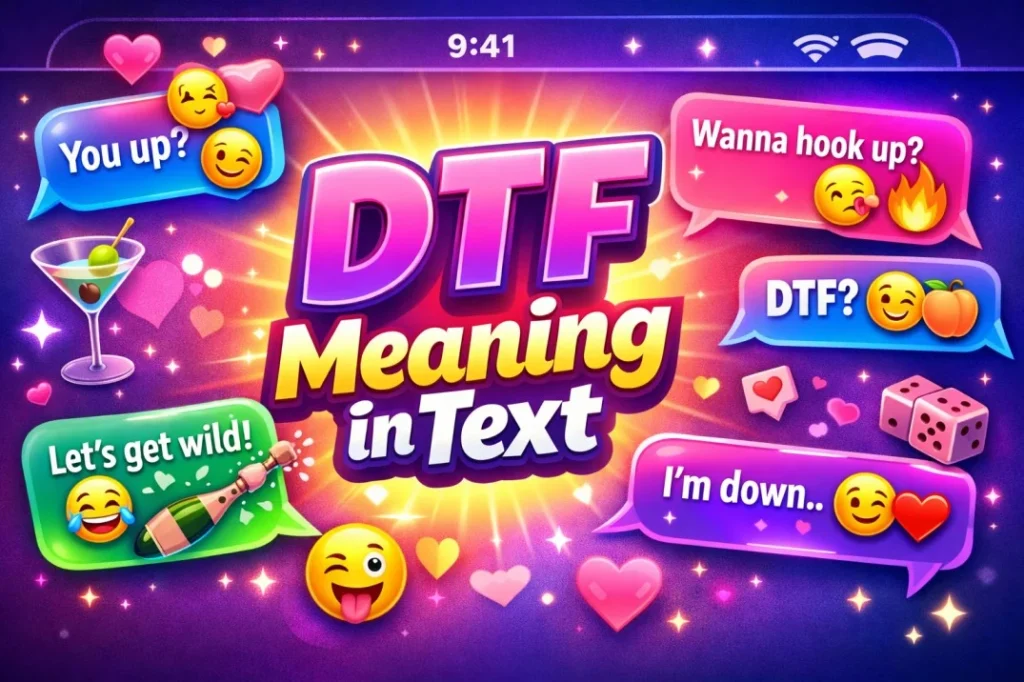

DTF in text means “Down To F*,” which is a slang phrase used to ask or express willingness for casual sexual activity.** It is informal, direct, and often used in dating or flirtatious contexts.
Ever received a message that simply said “DTF?” and paused for a second, wondering what exactly it meant? You’re not alone. In today’s fast-paced digital conversations, abbreviations like DTF can carry a lot of meaning in just three letters.
While that’s the core meaning, there’s more to understand about tone, context, and when (or when not) to use it. Let’s break it down in a clear, practical, and real-world way.
What Does DTF Mean in Text?
At its core, DTF stands for “Down To F*.”** It’s a bold and direct slang term typically used in:
- Dating apps
- Casual texting
- Flirty or suggestive conversations
It’s essentially a yes-or-no type question or statement about someone’s willingness to engage in a casual physical relationship.
However, tone and intent matter a lot. Depending on context, DTF can come across as:
- Playful
- Confident
- Blunt
- Or even disrespectful
Understanding this nuance is key to using or interpreting it correctly.
Origin of DTF
The phrase “DTF” became widely recognized in the late 2000s and early 2010s, especially with the rise of pop culture and reality TV.
- It gained massive popularity through dating culture and social media
- It was commonly used in college slang and nightlife conversations
- Dating apps later amplified its usage
Over time, DTF evolved into a widely understood internet slang term, especially among younger audiences.
Why People Use DTF in Chat
People use DTF because it is:
- Short and direct – No need for long explanations
- Clear in intent – Leaves little room for misunderstanding
- Common in modern dating culture
- Widely recognized slang
However, its directness is both its strength and its weakness. It can be efficient, but it can also feel too forward depending on the situation.
Usage of DTF in Text Conversations
DTF is not a one-size-fits-all phrase. Its meaning shifts slightly depending on tone and context.
1. Direct and Explicit Use
This is the most common usage. It directly asks about interest in a casual hookup.
Example:
“Are you DTF tonight?”
👉 Interpretation: A straightforward, bold question.
2. Playful or Flirty Use
Sometimes it’s used jokingly or lightly among people who already have rapport.
Example:
“Pizza and movies… or are you secretly DTF? 😄”
👉 Interpretation: Playful teasing with a hint of flirtation.
3. Sarcastic or Humorous Use
In some cases, people use DTF ironically.
Example:
“I’m only DTF… Down To Food 😂”
👉 Interpretation: Joke or wordplay, not literal meaning.
4. Casual Dating Context
Often appears in dating apps where expectations are already somewhat informal.
Example:
“Not looking for anything serious, just DTF.”
👉 Interpretation: Clear intention for casual interaction.
Table: Tone and Context of DTF Usage
| Tone | Example Message | Interpretation |
|---|---|---|
| Direct | “You DTF?” | Straightforward and bold |
| Playful | “Are you DTF or just here for memes?” | Light teasing with flirtation |
| Humorous | “DTF = Down To Fries 🍟” | Joke or playful reinterpretation |
| Casual Dating | “I’m DTF, nothing serious” | Clear casual relationship intent |
| Negative/Offensive | “DTF or not?” (to a stranger) | Can feel rude or inappropriate |
Is DTF Rude or Offensive?
This depends heavily on context and relationship.
When it may be acceptable:
- Between consenting adults
- In casual dating environments
- When both parties are comfortable
When it may be inappropriate:
- Professional settings
- Conversations with strangers
- Formal or respectful communication
Important tip:
DTF can easily come across as disrespectful if used without context or mutual understanding.
Comparison with Related Slang Terms
DTF is just one of many slang expressions used in texting. Here’s how it compares to others.
| Term | Meaning | Tone | Usage Context |
|---|---|---|---|
| DTF | Down To F*** | Direct, bold | Casual dating, flirting |
| Netflix and Chill | Suggestive hangout | Indirect, playful | Dating, flirting |
| Hook Up | Casual physical interaction | Neutral | General conversation |
| FWB | Friends With Benefits | Casual but defined | Ongoing arrangement |
| Smash | Slang for sex | Informal, modern | Youth slang |
Extended Comparison Table (Infographic Ready)
| Phrase | Directness Level | Tone Type | Best Used In | Risk Level |
|---|---|---|---|---|
| DTF | Very High | Bold, blunt | Casual dating apps | High |
| Netflix & Chill | Medium | Playful | Flirty conversations | Medium |
| Hook Up | Medium | Neutral | General discussion | Low |
| FWB | Medium | Clear but casual | Ongoing arrangements | Medium |
| Just Hang Out | Low | Safe, neutral | Friendly or early stage | Very Low |
Alternate Meanings of DTF
While the primary meaning is widely known, DTF can also have alternate meanings depending on context:
- Down To Fun – A softer, less explicit interpretation
- Down To Food – Often used humorously
- Direct To Film (DTF) – In media or production context
- Design/Tech usage – Rarely used in technical jargon
Still, in texting and social media, the default meaning remains the original one.
Polite or Safer Alternatives
If you want to keep things respectful or less direct, consider these alternatives:
- “Do you want to hang out?”
- “Want to grab dinner or drinks?”
- “I’d like to spend time with you”
- “Are you free tonight?”
- “Let’s meet up and see where things go”
These options maintain interest while being more respectful and socially appropriate.
Table: DTF vs Polite Alternatives
| DTF Style Message | Better Alternative |
|---|---|
| “You DTF?” | “Do you want to hang out?” |
| “DTF tonight?” | “Are you free tonight?” |
| “I’m DTF” | “I’m open to something casual” |
| “DTF or not?” | “What are you looking for?” |
Real-World Usage Examples
1. Dating App Scenario
“I’m not looking for anything serious, just DTF.”
👉 Clear, direct, and honest intention.
2. Flirty Conversation
“So… are you DTF or just here for good conversation? 😏”
👉 Playful but still suggestive.
3. Joke Context
“I’m DTF… Down To Fries 🍟”
👉 Completely harmless humor.
4. Misuse Example
Sending “DTF?” to someone you just met.
👉 Likely to come off as rude or disrespectful.
Cultural Context of DTF
DTF reflects modern dating culture where communication is:
- Faster
- More direct
- Often less formal
It is especially common among:
- Younger audiences
- Dating app users
- Online communities
However, cultural norms differ. What’s acceptable in one group may feel inappropriate in another.
When NOT to Use DTF
Avoid using DTF in:
- Workplace chats
- Professional emails
- Conversations with strangers
- Serious or emotional discussions
Using it in the wrong context can damage impressions quickly.
Practical Tips for Using or Responding to DTF
- Always consider context and relationship
- Be aware of tone and timing
- Avoid using it with strangers
- Use humor carefully
- Choose alternatives if unsure
If someone sends you “DTF?” you can:
- Respond directly if comfortable
- Redirect the conversation politely
- Ignore if it feels inappropriate
FAQs
1. What does DTF mean in texting?
DTF means “Down To F***,” indicating willingness for casual sexual activity.
2. Is DTF always sexual?
Mostly yes, although sometimes it is used jokingly as “Down To Food” or “Down To Fun.”
3. Is DTF rude to say?
It can be, especially if used with someone you don’t know well or without context.
4. Can DTF be used jokingly?
Yes, many people use it humorously with alternate meanings.
5. Is DTF appropriate for dating apps?
It depends on the app and user expectations, but it is commonly used in casual dating spaces.
6. What is a safer alternative to DTF?
“Do you want to hang out?” or “Are you free tonight?” are more polite options.
7. Is DTF still used in 2026?
Yes, though some users prefer less direct or more subtle phrases now.
8. What does DTF mean for girls vs guys?
The meaning is the same, but how it’s perceived may differ depending on context and tone.
Conclusion
DTF is one of the most direct and bold slang terms in modern texting culture. It clearly communicates intent, but that clarity comes with responsibility.
Used in the right context, it can be playful or efficient. Used carelessly, it can feel rude or disrespectful.
Understanding its meaning, tone, and alternatives allows you to navigate conversations more confidently and respectfully. Whether you choose to use it or avoid it, knowing what DTF means ensures you’re never caught off guard in a conversation.
Read More Related Articles:
- Brigitte Nielsen Net Worth: Fortune, Fame & Comeback In 2026
- Andy Stanley Net Worth: Faith, Fortune & Influence In 2026
- Charlie Hunnam Net Worth: TV Roles, Film Paydays & Assets In 2025-26