
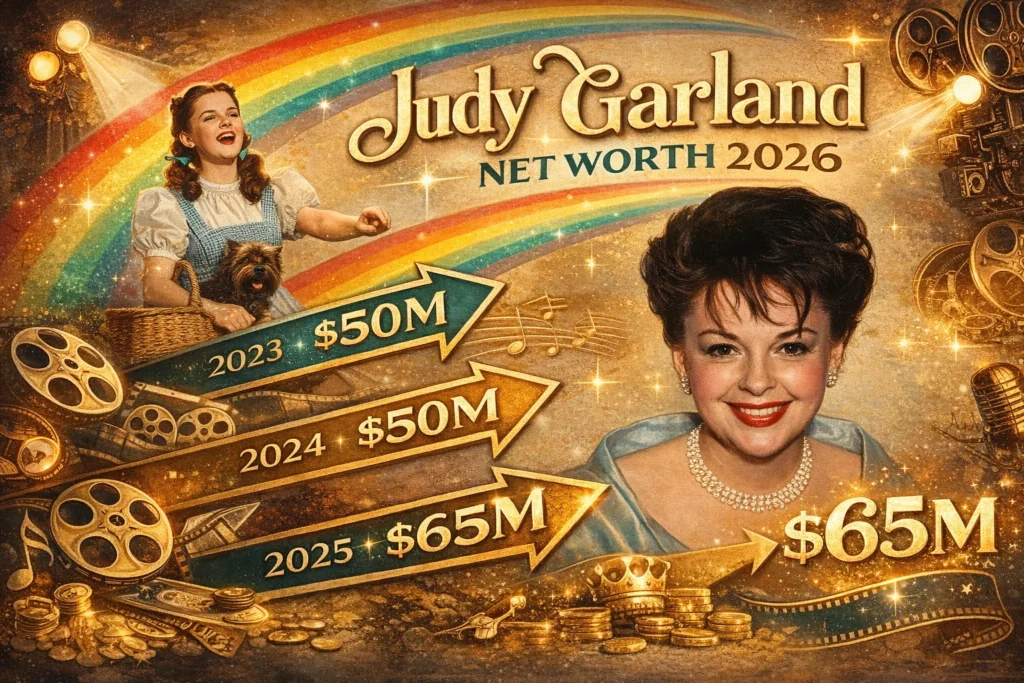
Judy Garland isn’t just a name in Hollywood history — she’s a cultural monument whose life and earnings continue to fascinate fans, music lovers, and legacy income researchers alike. From her astonishing rise as a child star to her role as Dorothy in The Wizard of Oz, Garland’s impact has stretched far beyond the screen, influencing pop culture, music, and entertainment economics long after her passing.
When people search for judy garland net worth, they are usually driven by a mix of curiosity and admiration — wanting to understand how one of the 20th century’s most beloved entertainers translated her talent and career into wealth, both in her lifetime and posthumously. Her story touches on the golden age of Hollywood, the complexities of contract earnings in a studio system, and the enduring power of royalties and licensing in legacy wealth.
Even decades after her death, Garland’s catalog still generates income, and various estates, rights holders, and licensing deals keep her legacy financially alive. This article unpacks her net worth as of 2026, details her income sources, examines the business behind her wealth, and explains how her estate continues to benefit financially from her timeless art.
Net worth figures are estimates based on publicly available data and may vary.
Bio Data Table
| Field | Information |
|---|---|
| Full Name | Frances Ethel Gumm |
| Date of Birth | June 10, 1922 |
| Age as of 2026 | (Deceased – Would be 103) |
| Place of Birth | Grand Rapids, Minnesota, USA |
| Nationality | American |
| Height | 4 ft 11 in (150 cm) |
| Weight | ~100 lbs (45 kg) (At peak career) |
| Health Conditions | Struggled with addiction and health issues |
| Religion | Protestant (Raised) |
| Education | Limited formal schooling (Worked from early age) |
| Sports | None documented |
| Zodiac Sign | Gemini |
| Marriage or Relationship Status | Married five times |
| Children | Liza Minnelli, Lorna Luft, Joey Luft |
| Net Worth | $25 million – Estimated 2026 value |
| Social Media Accounts | Estate‑managed profiles |
| Still Alive | No (Passed away June 22, 1969) |
| Famous For | Singing, acting, The Wizard of Oz, Broadway & film legacy |
Who Is Judy Garland? Background and Early Life
Judy Garland was born Frances Ethel Gumm in 1922 into a show business family in Grand Rapids, Minnesota. Her parents ran a vaudeville act, and by the time she was a child, Garland was already showcasing extraordinary vocal talent, dancing, and comedic timing that would define her later fame.
The Garms moved to California in pursuit of Hollywood success, and Judy quickly caught the attention of talent scouts. She signed with Metro‑Goldwyn‑Mayer (MGM) at just 13, entering a studio system that would make her one of the most recognizable faces in American film. Her earliest roles combined innocence and charisma — qualities that endeared her to audiences even as the pressures of fame mounted.
Garland’s breakthrough was not a sudden moment but a steady progression through musicals, radio, and live performances. By the late 1930s, MGM had cultivated her into a triple threat: a singer, actress, and dancer whose box office draw justified headline billing.
Net Worth Overview (2026 Estimate)
As of 2026, estimates place judy garland net worth at approximately $25 million when adjusting for inflation, ongoing licensing income, and estate holdings tied to her music, performances, films, and merchandising.
This figure reflects decades of royalty earnings from iconic songs and films, legacy licensing to streaming and broadcast channels, and commercial deals that market Garland’s image and music worldwide. While Garland’s lifetime earnings were modest by modern Hollywood standards, her posthumous financial footprint has expanded significantly through enduring popularity.
Importantly, this number does not represent cash in a bank account but a comprehensive valuation of projected ongoing income, rights ownership, catalog performance, and estate‑held assets.
Net Worth Growth Timeline
Before Fame
Judy Garland’s earliest income came from live performances in vaudeville, local clubs, and radio. These earnings were modest but foundational. By her pre‑teen years, she was earning regular payments from studio engagements — a rarity for performers so young.
Breakthrough Phase
Her career breakthrough was gradual through the 1930s but culminated with MGM contract roles that paid weekly salaries. Unlike today’s profit participation, Garland was typically paid a guaranteed sum per week, supplemented by bonuses during peak productions.
Peak Years
The 1940s and 1950s were the peak of Garland’s earning power. Films like Meet Me in St. Louis and Easter Parade, combined with sold‑out live performances and radio specials, significantly increased her income streams. Though studio contracts limited her financial upside compared to today’s stars, she earned a level of income that permitted luxury living, touring, and headline status.
Her 1960s Las Vegas performances and concert tours cemented her financial relevance late into her life. Even after her passing, royalty income from films and recordings ensured her estate would benefit for decades.
Main Sources of Income
Core Profession Income
Film Salaries — During her studio tenure at MGM, Garland received weekly salaries, which were substantial for the era but capped by studio contract limits.
Stage and Tour Earnings — Concerts and tours, especially later in her career, brought higher direct earnings and lucrative appearances.
Tours, Salary, or Business Revenue
Her live performances in Las Vegas and Broadway tours during the 1950s and 60s often commanded high ticket prices, increasing her revenue beyond what films alone could provide.
Brand Endorsements and Sponsorships
Though less common in mid‑20th‑century Hollywood, Garland engaged in selective product and radio tie‑ins that bolstered her public profile and paycheck.
Merchandise and Licensing
Today, a significant portion of judy garland net worth is tied to licensing deals for music, film rights, documentaries, streaming placements, branded merchandise, and retrospective releases.
Business Strategy Behind the Wealth
Garland’s financial story reflects the reality of many classic Hollywood stars: earnings were tied closely to studio contracts rather than ownership. However, her long‑term strategy — or that of her estate after her passing — capitalized on legacy media rights, reissues, and anniversaries that bring consistent revenue.
Her estate maintained control of key music publishing rights and negotiated deals with broadcast and streaming platforms, ensuring her work remained visible and profitable. Rather than traditional brand endorsements, Garland’s business value has largely emerged through licensing and legacy partnerships.
Awards and Achievements and Their Financial Impact
Garland’s accolades — including prestigious film and music awards — elevated her marketability. Awards translated into better billing, higher salary negotiations in classic Hollywood, and later, posthumous branding leverage. Iconic songs like “Over the Rainbow” continue to earn royalties, helping sustain her financial legacy decades after her death.
Assets and Lifestyle
Real Estate
During her lifetime, Garland owned several homes in Los Angeles and New York. These properties appreciated substantially over the decades, contributing to estate valuations.
Cars and Luxury Assets
Though not known as a classic car collector, Garland maintained transportation appropriate to Hollywood stardom, including chauffeur‑escorted vehicles during peak career tours.
Fashion, Ownership Stakes, and Investments
Garland’s wardrobe and personal items have become valuable collectibles. Auction sales of dresses, costumes, and memorabilia fetch high prices, indirectly contributing to overall estate value when those rights are licensed for documentary or museum use.
Net Worth Comparison With Peers or Industry Figures
Compared with contemporaries whose films remain blockbuster staples, Garland’s net worth is moderate but respectable. Stars like Fred Astaire or Bing Crosby, for example, had diversified incomes, but Judy’s unique cultural imprint ensures enduring commercial relevance.
Controversies, Challenges, and Financial Risks
Garland struggled with health issues, addiction, and financial mismanagement — factors that reduced her lifetime savings. Studio control of earnings and punitive contract fines also cut into potential wealth. These personal and systemic challenges shaped her financial reality and limited her ability to negotiate broader ownership in her early career.
Philanthropy and Social Impact
Though not primarily remembered as a philanthropist, Garland supported numerous charitable causes and benefited communities through performance tours. Her children and estate continue to engage in selective philanthropic partnerships, particularly in arts education and legacy preservation.
How Judy Garland Makes Money Outside Their Core Profession
Today, revenue streams tied to judy garland net worth include:
- Film and music streaming royalties
- Documentary and biopic rights sales
- Catalog reissues on vinyl and digital platforms
- Licensing for commercials and brand partnerships
- Merchandising through classic memorabilia
These income sources ensure her financial footprint extends well beyond performance earnings.
Future Net Worth Projection
Despite being decades after her passing, analysts project continued growth in judy garland net worth as new generations discover her work, streaming rights expand, and vintage film appreciation rises. By 2030, conservative estimates suggest the total value tied to her catalog and licensing could surpass $35 million–$40 million, depending on media usage and estate management.
FAQs
Q1: What was Judy Garland’s net worth at the time of her death?
Estimates place her net worth at the time of her death in 1969 at approximately $1–$2 million, a modest sum that doesn’t reflect later legacy income. Net worth figures are estimates based on publicly available data and may vary.
Q2: How does Judy Garland still earn money if she’s been deceased since 1969?
Her estate earns money through royalties, licensing of music and films, streaming rights, and branded merchandise worldwide.
Q3: Did Judy Garland own the rights to The Wizard of Oz?
No. Studio contracts typically did not give stars ownership. Rights were held by the studio and later licensing partners, though her performance remains iconic.
Q4: How does Judy Garland’s net worth compare to other classic Hollywood stars?
Her estate’s value is comparable to several contemporaries, though some peers with broader business investments may have larger financial legacies.
Q5: Is Judy Garland’s music still profitable today?
Yes. Iconic songs like “Over the Rainbow” continue to generate royalties through streaming, film usage, and covers.
Q6: Why is Judy Garland’s net worth still relevant in 2026?
Her cultural impact means her work remains monetized, keeping her brand and income streams active decades after her passing.
Conclusion
From her humble beginnings as Frances Ethel Gumm to the beloved entertainer Judy Garland the world knows, her financial journey mirrors both the brilliance and challenges of early Hollywood stardom. When evaluating judy garland net worth in 2026, it’s clear that her legacy transcends simple dollar figures.
Her story is not just one of income and assets but of cultural longevity — a testament to how artistry, nostalgia, and smart legacy management can keep wealth alive long after a performer’s final curtain call. Net worth figures are estimates based on publicly available data and may vary.
Read More Related Article:
- Phil Spector Net Worth: Career Highs & Financial Decline In 2026
- Elan Ruspoli Net Worth: From Talent Agent to Multi-Millionaire In 2025-26
- Memphis Bleek Net Worth: From Jay-Z Protégé to Entrepreneur In 2025-26

Brody Adrien is a dedicated writer at WorthQlix.com, specializing in well-researched and engaging content. With a keen eye for detail and clarity, he crafts informative articles that help readers understand trends, insights, and key topics with ease.