
Maria Callas’s story blends soaring beauty, operatic triumph, and a financial legacy that continues to intrigue fans and finance enthusiasts alike. Known as “La Divina,” she transformed opera in the mid‑20th century with emotional intensity and vocal mastery, making her one of the most revered sopranos of all time.
Despite retiring from the stage decades before her death in 1977, maria callas net worth remains a topic of fascination — not just for classical music aficionados, but also for readers curious about how an opera star could build and preserve wealth in an era before celebrity branding and modern royalties. Her earnings, estate, artistic legacy, and the ongoing financial impact of her recordings offer a captivating financial journey worth exploring.
From performance fees in grand theaters across Europe and the United States to the enduring royalties from recordings that continue to sell worldwide, Callas’s fortune reflects a unique blend of artistry and commercial success. That said, it’s important to remember the financial landscape of her era was dramatically different from today’s entertainment economy.
Bio Data Table
| Field | Information |
|---|---|
| Full Name | Maria Cecilia Sophia Anna Kalogeropoulos |
| Date of Birth | December 2, 1923 |
| Age as of 2026 | N/A (Died 1977 at age 53) |
| Place of Birth | New York City, New York, U.S. |
| Nationality | Greek‑American |
| Height | Approx. 5′7″ (170 cm) |
| Weight | Approx. 120 lb / 54 kg in later years |
| Health Conditions | Vocal strain and later dermatomyositis contributing to career decline |
| Religion | Greek Orthodox |
| Education | Athens Conservatoire |
| Sports | N/A |
| Zodiac Sign | Sagittarius |
| Marriage or Relationship Status | Divorced; long‑term partner Aristotle Onassis |
| Children | None |
| Net Worth | Approx. $8M estate at death (~$40M today) estimate |
| Social Media Accounts | None official (legacy fan pages exist) |
| Still Alive | No (Died 1977) |
| Famous For | Iconic opera performances and recordings |
Who Is Maria Callas? Background and Early Life
Maria Callas was born Maria Cecilia Sophia Anna Kalogeropoulos on December 2, 1923, in New York City to Greek immigrant parents. Even from an early age she demonstrated prodigious musical talent, studying piano before embarking on formal vocal training.
Her family relocated back to Greece during her teenage years, where she honed her craft at the prestigious Athens Conservatoire. Her expressive soprano voice and dramatic intensity quickly elevated her above her contemporaries, leading to early operatic engagements in Athens and then major European stages.
By the late 1940s and 1950s, Callas was regularly commanding marquee performances in world capitals of opera, including Milan, Paris, and New York, becoming a global phenomenon whose recordings sold millions of copies.
Net Worth Overview (2026 Estimate)
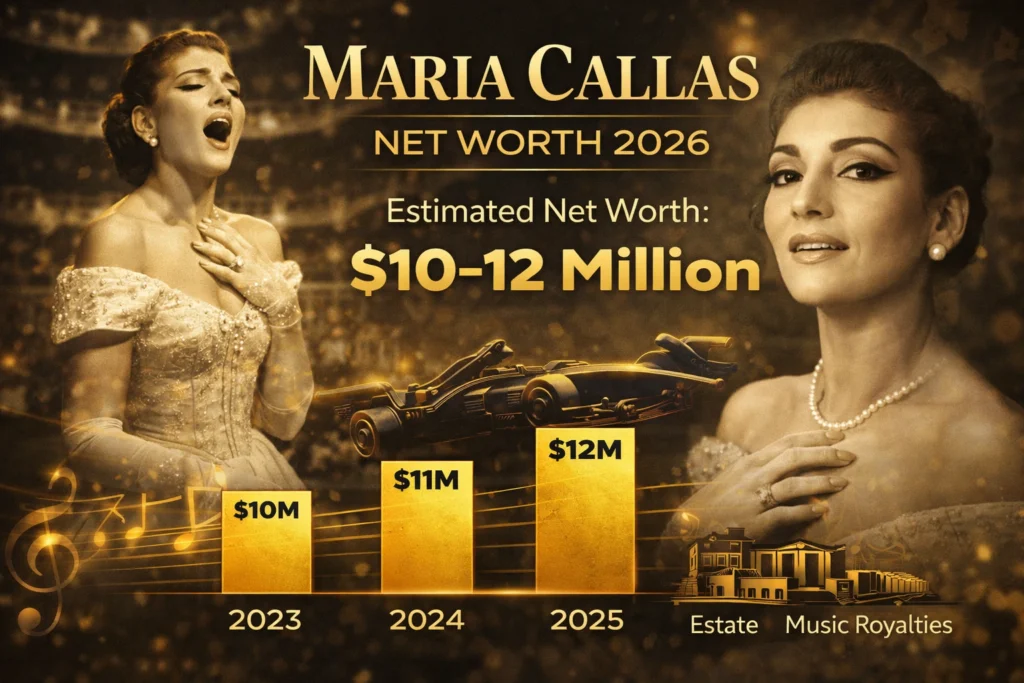
As of 2026, maria callas net worth is best understood not as a precise current bank balance but as an estimated inflation‑adjusted valuation of her lifetime earnings and estate, combined with the lasting financial impact of her recordings and legacy assets.
Based on historical estate valuations and modern economic benchmarks:
👉 Estimated Net Worth at Death (1977): ~$8 million
👉 Estimated Net Worth in 2026 Dollars: ~$35–$45 million
These figures encompass performance fees, recording royalties, real estate, and sales of memorabilia. Net worth figures are estimates based on publicly available data and may vary.
Her estate became the subject of legal disputes after her death due to the absence of a formal will, further complicating the exact value of her assets.
Net Worth Growth Timeline
Before Fame
Callas grew up in modest surroundings with early musical training that focused more on discipline than financial reward. Performance fees in smaller European houses paid modest salaries appropriate for emerging artists in the 1930s and 1940s.
Breakthrough Phase
Her breakthrough came in the late 1940s and 1950s with principal engagements at leading opera houses. During this period:
- She commanded top fees for solo performances.
- Record labels signed contracts that sold millions of recordings.
- She developed a global reputation that fueled international tours.
Even though opera singers of that era didn’t command the multi‑million‑dollar contracts seen today, Callas was among the highest‑paid opera stars in the world.
Peak Years and Later Life
Her peak earning years spanned the 1950s and early 1960s. Later in life, she withdrew from frequent public performance, focusing instead on select concerts, teaching, and living in Paris. Though no longer actively touring, she continued to earn from recordings and rights.
Main Sources of Income
Core Profession Income
Maria Callas earned fees from opera houses across Italy, France, the U.S., and other cultural centers. These performance fees formed the backbone of her lifetime earnings.
Concert Tours and Salary
In addition to standard opera engagements, she performed in solo recitals and concerts that paid premium rates due to her celebrity status.
Recording Contracts and Royalties
Callas’s extensive discography with major labels such as EMI generated substantial royalties. These recordings continued to sell long after her death, contributing ongoing income tied to her estate.
Brand Endorsements and Sponsorships
Endorsements were limited compared to today’s celebrity landscape, but Callas’s image was licensed for album covers, documentaries, and biographical films.
Merchandise and Licensing
Her likeness and sound recordings have been licensed for compilations, DVDs, streaming releases, and biographical documentaries, further contributing to the economic footprint tied to her name.
Business Strategy Behind the Wealth
Callas’s financial strategy was rooted primarily in maximizing her artistic value — securing performance contracts, negotiating recording deals, and ensuring that her performances were preserved for global audiences. Though opera isn’t traditionally a high‑margin business compared to film or pop music, Callas carved out a niche that made her one of the most commercially successful classical artists of the 20th century.
Awards and Achievements and Their Financial Impact
While Callas’s career wasn’t defined by mainstream awards like the Grammys or Oscars, her recordings earned recognition and contributed to high sales volumes. Accolades such as Grammy achievements and honorary recognitions posthumously elevated her market value, introducing her legacy to new audiences and revenue streams.
Assets and Lifestyle
Real Estate
She owned properties in Paris and Italy, which provided both residences and investment value.
Cars and Luxury Assets
Though details about her personal automobiles are limited, Callas’s lifestyle prior to retirement included travel and couture appropriate for a global star.
Jewelry and Fashion
Several pieces of Callas’s jewelry have been auctioned for significant sums — a testament to the enduring value of her personal artifacts.
Net Worth Comparison With Peers or Industry Figures
Comparing Callas’s wealth to other opera legends of her time is challenging due to limited financial data, but she stands among the most financially successful opera singers of the 20th century. Her estate’s adjusted value places her in a similar economic bracket as other elite classical musicians.
Controversies, Challenges, and Financial Risks
Callas faced financial and personal turmoil throughout her life. A highly publicized split with her husband and manager Giovanni Battista Meneghini led to disputes over earnings and asset control.
Philanthropy and Social Impact
Callas’s economic impact extends beyond personal wealth. Her influence nurtured generations of singers, and her legacy supports cultural institutions and opera education programs around the world.
How Maria Callas Makes Money Outside Their Core Profession
Though deceased, Callas’s estate continues generating income through:
- Posthumous recording sales
- Licensing for film, documentaries, and streaming
- Merchandise and memorabilia auctions
These streams highlight how an artistic legacy can remain economically vibrant decades after death.
Future Net Worth Projection
In 2030 and beyond, maria callas net worth — when discussed as an “estate legacy value” — will likely remain stable or grow modestly with increased digital access, new biographical media, and continued cultural appreciation. Her recordings, documentaries, and authorized merchandise ensure her financial relevance for years to come.
FAQs
1. What was Maria Callas’s net worth at the time of her death?
At the time of her death in 1977, the estate was valued at approximately $8 million, equivalent to roughly $40 million today after inflation. Net worth figures are estimates based on publicly available data and may vary.
2. What were the main sources of Maria Callas’s income?
Her primary income streams included opera performance fees, recording royalties, concert tours, and licensing of her recordings.
3. Did Maria Callas earn money from movies and documentaries?
While she did not act in films during her lifetime, her life has inspired documentaries and biographical movies that generate ongoing licensing income.
4. Did Maria Callas have endorsement deals?
Formal endorsements were rare in her era, but her image and recordings were widely marketed, contributing to her commercial value.
5. How does Maria Callas’s net worth compare to modern opera stars?
Though direct comparisons are difficult due to different eras, Callas remains one of the highest‑earning opera legends, with a legacy that rivals many contemporary classical artists.
6. Does Maria Callas still earn income posthumously?
Yes — through royalties from recordings, licensing for documentaries, and sales of memorabilia.
Conclusion
The maria callas net worth story is not just about a figure on a balance sheet — it’s the financial portrait of an operatic titan whose influence spanned continents and generations. From humble beginnings in New York and Athens to the stages of La Scala and the Metropolitan Opera, Callas turned artistic excellence into long‑standing cultural and economic value.
Her estate, recordings, and artistic legacy ensure that she remains financially and artistically relevant decades after her passing. Net worth figures are estimates based on publicly available data and may vary, yet they underscore a remarkable journey where passion met prosperity in the world of classical music.
Read More Related Articles:
- Romeo Miller Net Worth: Career Timeline & Income Rise In 2025-26
- Stray Kids Net Worth: How the K-Pop Superstars Built Their Fortune In 2025-26
- Michelle Moyer Net Worth: Wealth and Lifestyle Insights In 2025-26

Grace Ellis is a dedicated writer at WorthQlix.com, crafting clear and engaging content that helps readers understand trends, facts, and insights with ease. She focuses on delivering well-researched articles that inform, simplify, and add value.