

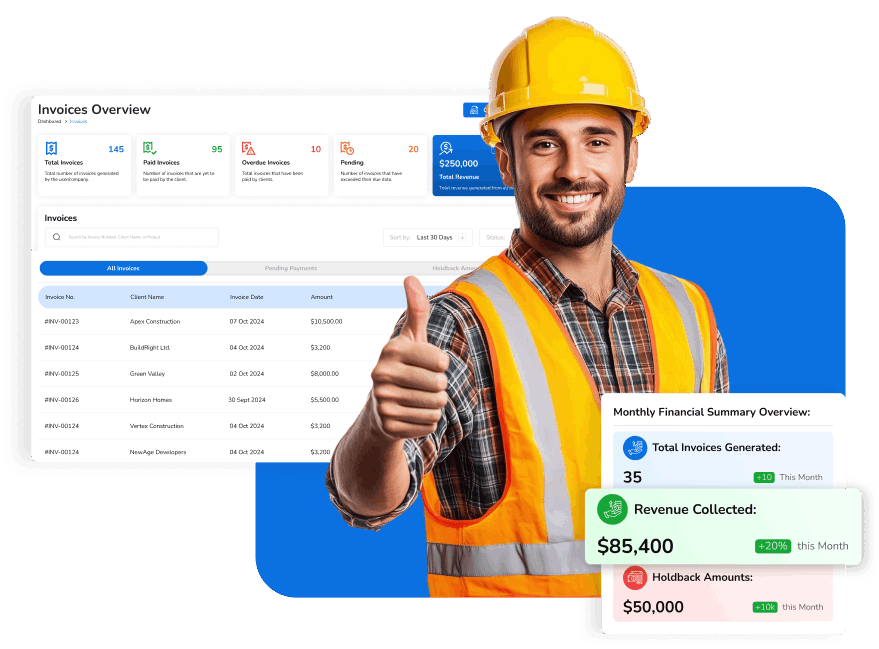
In today’s construction industry, managing money is just as important as managing materials and labor. Large projects involve complex budgets, multiple contractors, changing material prices, and strict deadlines. Without proper financial control, even well-planned construction projects can face delays, cost overruns, or complete failure.
This is where construction financial management software becomes essential. It helps contractors, builders, and project managers track expenses, control budgets, manage invoices, and improve financial decision-making using digital tools.
In this article, we will explore what construction financial management software is, how it works, its key features, benefits, use cases, challenges, and why it is becoming a must-have in modern construction projects.
What Is Construction Financial Management Software?
Construction financial management software is a digital system designed to manage all financial aspects of a construction project. It helps companies plan budgets, track spending, manage payroll, handle invoices, and monitor project profitability in real time.
Instead of using spreadsheets or manual bookkeeping, this software centralizes financial data in one place and provides accurate insights.
It is commonly used for:
- Budget planning and forecasting
- Cost tracking and control
- Invoice and billing management
- Payroll processing
- Expense tracking
- Financial reporting
In simple terms, it acts as the financial backbone of a construction project.
Why Financial Management Software Is Important in Construction
Construction projects are financially complex because they involve many moving parts. Even small errors in financial planning can lead to major losses.
Here’s why this software is important:
1. Prevents Budget Overruns
It tracks spending in real time so companies know when they are going over budget.
2. Improves Cost Accuracy
Accurate cost tracking helps in better project planning and bidding.
3. Reduces Financial Errors
Manual accounting often leads to mistakes. Software reduces human error.
4. Enhances Decision Making
Project managers can make better decisions using real-time financial data.
5. Increases Profitability
Better financial control leads to higher profit margins.
How Construction Financial Management Software Works
Most modern systems follow a structured workflow:
Step 1: Budget Setup
Users create a project budget, including:
- Material costs
- Labor costs
- Equipment costs
- Overhead expenses
Step 2: Data Entry and Integration
The software collects financial data from:
- Purchase orders
- Supplier invoices
- Payroll systems
- Site expenses
Step 3: Real-Time Tracking
All expenses are tracked in real time and compared with the original budget.
Step 4: Financial Analysis
The system analyzes cash flow, profit margins, and cost variations.
Step 5: Reporting
Detailed financial reports are generated for management review.
Key Features of Construction Financial Management Software
Modern software tools come with powerful features designed for construction businesses.
1. Budget Management
Helps create and monitor project budgets with detailed breakdowns.
2. Cost Tracking
Tracks every expense related to materials, labor, and equipment.
3. Invoice Management
Automatically generates and manages client and vendor invoices.
4. Payroll Integration
Handles worker salaries, overtime, and contractor payments.
5. Cash Flow Management
Provides insights into incoming and outgoing cash.
6. Financial Reporting
Generates reports like profit and loss statements and balance sheets.
7. Cloud Access
Allows teams to access financial data from anywhere.
Benefits of Using Construction Financial Management Software
Using financial management software offers several advantages:
Improved Budget Control
Companies can monitor spending and avoid unnecessary costs.
Better Financial Transparency
Everyone involved in the project can see updated financial data.
Faster Processing
Automates tasks like billing and payroll, saving time.
Increased Accuracy
Reduces human errors in calculations and reporting.
Better Project Planning
Historical financial data helps improve future estimates.
Enhanced Collaboration
Multiple teams can work together using shared financial data.
Who Uses Construction Financial Management Software?
This software is widely used across the construction industry:
- Construction companies
- Project managers
- Civil engineers
- Contractors and subcontractors
- Real estate developers
- Financial managers
- Architecture firms
Basically, anyone involved in construction budgeting or financial planning can benefit from it.
Common Use Cases in Construction
Construction financial software is used in many real-world scenarios:
Residential Projects
Managing budgets for houses, apartments, and housing societies.
Commercial Projects
Handling finances for offices, malls, and shopping complexes.
Infrastructure Projects
Managing large budgets for roads, bridges, and highways.
Renovation Projects
Tracking expenses for remodeling and repair work.
Tender and Bidding
Creating accurate cost estimates for project bids.
Challenges in Construction Financial Management
Even with advanced software, some challenges remain:
Complex Project Structures
Large projects involve multiple contractors and vendors.
Changing Material Costs
Prices of steel, cement, and labor can fluctuate.
Data Entry Errors
Incorrect inputs can affect financial accuracy.
Software Learning Curve
Some systems require training to use effectively.
Integration Issues
Combining software with existing systems can be difficult.
Types of Construction Financial Management Software
There are different types available in the market:
1. Cloud-Based Software
Accessible from anywhere with internet connection.
2. On-Premise Software
Installed locally on company computers for full control.
3. ERP-Based Systems
Integrated systems that combine finance, HR, and project management.
4. Mobile-Based Apps
Used for on-site expense tracking and quick updates.
Future of Construction Financial Management Software
The future of construction finance is strongly connected to digital transformation.
AI-Powered Finance Tools
AI will predict costs, risks, and budget overruns before they happen.
Real-Time Analytics
Instant financial insights will improve decision-making.
Blockchain Integration
Secure and transparent financial transactions.
Automation
Full automation of billing, payroll, and reporting systems.
Smart Integration
Connection with BIM and project management tools for complete control.
Why Construction Financial Software Is Essential Today
Modern construction projects require accuracy, speed, and financial control. Without proper financial management, even successful projects can lose profitability.
This software ensures that:
- Every expense is tracked
- Budgets are controlled
- Financial risks are reduced
- Profitability is improved
It has become a core tool in the construction industry, especially for medium and large-scale projects.
Final Thoughts
Construction financial management software is transforming how construction companies handle money. It replaces manual accounting systems with automated, accurate, and real-time financial tracking tools.
From budgeting and payroll to invoicing and reporting, it covers every aspect of construction finance. While it cannot completely replace financial professionals, it significantly improves efficiency, accuracy, and decision-making.
As technology continues to evolve, this software will become even more powerful with AI, automation, and cloud integration, making construction projects more organized and profitable.
FAQs
1. What is construction financial management software?
It is a digital tool used to manage budgets, expenses, invoices, and financial reporting in construction projects.
2. Why is financial software important in construction?
It helps control costs, reduce errors, and improve project profitability.
3. Who uses construction financial management software?
Contractors, project managers, engineers, and construction companies use it.
4. Does it help in budgeting?
Yes, it helps create and monitor detailed project budgets.
5. Is cloud-based software better?
Cloud-based systems offer better flexibility and remote access.
6. Can it replace accountants?
No, it supports accountants but does not fully replace them.
7. What is the future of this software?
It will use AI, automation, and real-time analytics for smarter financial management.

