

Dining chairs do far more than fill space around a table—they set the emotional tone of a room, invite guests to linger, and quietly communicate a designer’s intent. Yet selecting the right chair presents a familiar tension: how do you achieve genuine, lasting comfort without compromising the visual harmony of a carefully curated space? Two contemporary design philosophies have emerged as masterful answers to this question. Japandi, the refined marriage of Japanese minimalism and Scandinavian warmth, and Organic Modern, a movement that softens clean modernist lines with nature’s sculptural forms, both offer distinct yet equally compelling paths toward comfortable dining chairs that feel as good as they look. For interior designers navigating client expectations and evolving trends, the question becomes practical: how can the principles behind these styles guide smarter, more intentional chair selections that elevate entire dining room aesthetics? This article breaks down both philosophies, compares their approaches to comfort, and delivers actionable inspiration you can apply to your next project.
Understanding the Core Philosophies: Japandi and Organic Modern
Japandi emerged from an unlikely yet deeply logical pairing: the Japanese reverence for imperfection, restraint, and purposeful design merged with Scandinavia’s devotion to warmth, livability, and democratic beauty. At its Japanese root lies wabi-sabi—the acceptance of transience and the celebration of quiet, unadorned craftsmanship. Every element earns its place through function and meaning, never decoration alone. From the Scandinavian side comes hygge, that untranslatable sense of cozy contentment achieved through soft light, natural materials, and spaces that feel genuinely welcoming rather than austere. The result is an aesthetic of serene, edited simplicity where nothing competes for attention, yet everything contributes to a feeling of calm inhabitation. In dining chair design, this translates to pieces with clean silhouettes, restrained joinery details, and a palette drawn from pale woods, muted earth tones, and natural fibers that whisper rather than shout.
Organic Modern follows a different lineage. It grows from mid-century modernism’s love of clean geometry but rebels against that movement’s occasional coldness by reintroducing nature’s unpredictable hand. Where strict modernism favored machine precision, Organic Modern embraces curves inspired by river stones, sculptural backs that echo wind-worn driftwood, and surfaces that reveal grain, texture, and the raw honesty of their origins. The connection to the natural world isn’t merely visual—it’s philosophical. These designs argue that human comfort depends on proximity to organic forms, that our bodies respond instinctively to shapes found in landscapes rather than factories. Dining chairs in this tradition tend toward enveloping silhouettes, generous proportions, and a tactile richness that invites touch.
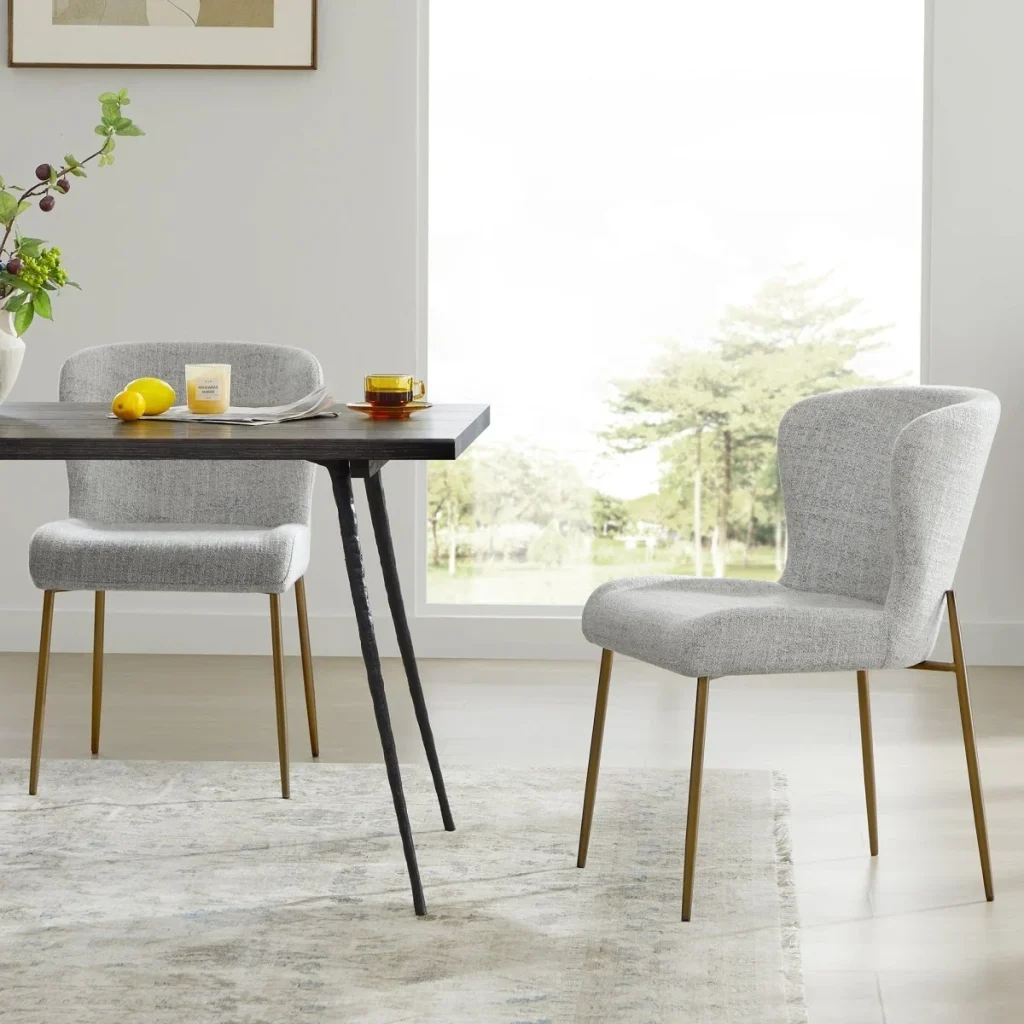
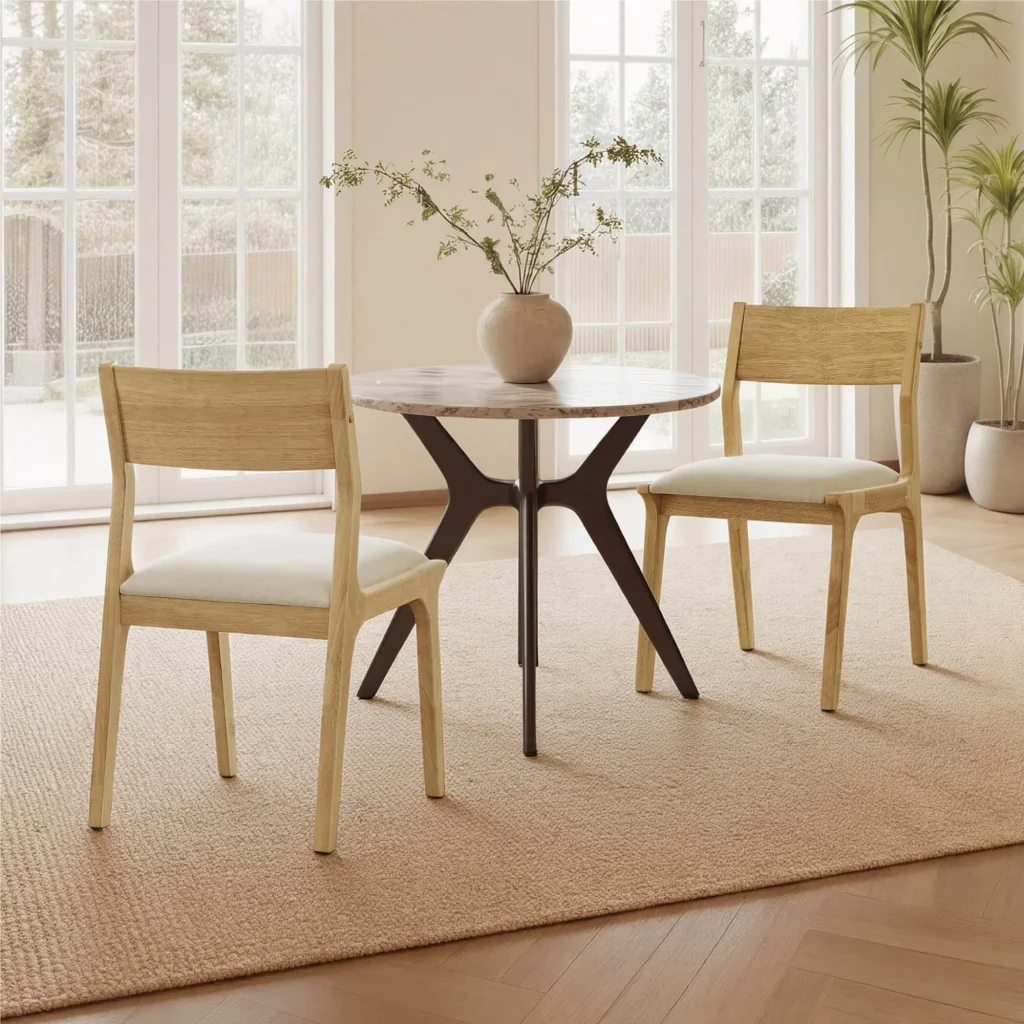
The contrast between these philosophies becomes clearest in their editing principles. Japandi subtracts until only the essential remains, achieving comfort through proportion, ergonomic precision, and the psychological ease of uncluttered space. Organic Modern adds—layering textures, introducing sculptural volume, building warmth through accumulation of natural references. Yet both arrive at the same destination: dining chairs that honor the human body while serving a larger aesthetic vision. For interior designers, this shared commitment to comfort-through-beauty makes either philosophy a reliable framework. Japandi guides you toward chairs that disappear gracefully into a composed tableau, while Organic Modern directs you toward statement pieces that become the room’s grounding element. Understanding which framework suits a project’s spatial context and emotional goals is the first step toward selections that genuinely satisfy both designer and client.
Balancing Comfort and Aesthetics in Chair Design
Comfort in dining chair design extends well beyond cushion thickness or lumbar support. Both Japandi and Organic Modern recognize that true comfort operates on three levels simultaneously: physical ease during a long meal, visual calm that allows the eye to rest, and emotional resonance that makes a person feel genuinely at home. A chair might support the spine perfectly yet create visual tension through clashing proportions or aggressive materiality. Conversely, a stunning sculptural piece that fatigues the body after twenty minutes fails its fundamental purpose. The genius of both philosophies lies in their insistence that these dimensions cannot be separated—that a chair must satisfy the body, the eye, and the spirit as a single integrated experience.
The Role of Material and Form
Material selection in Japandi gravitates toward light-toned woods—ash, white oak, maple—chosen for their ability to reflect ambient light and create an impression of weightlessness. These woods are typically finished with minimal treatment, allowing subtle grain to provide visual interest without demanding attention. Forms stay low-profile and geometric, with slim tapered legs, flat or gently curved seats, and backs that rise just high enough to support without enclosing. The physical comfort emerges from precise proportioning: seat heights calibrated to standard table dimensions, depths that support the thigh without pressing behind the knee, and back angles that encourage upright yet relaxed posture during conversation.
Organic Modern takes a more expansive material approach, freely combining warm woods with bouclé upholstery, woven rattan, molded leather, or even concrete and stone accents on structural elements. Forms curve generously—barrel backs wrap around the sitter, sculpted seats cradle the body, and legs might taper or bow like branches. This enveloping geometry distributes weight across broader contact surfaces, creating comfort through support that feels intuitive rather than engineered. The visual weight of these chairs runs heavier than their Japandi counterparts, grounding a room rather than floating within it. For designers, this distinction matters practically: Japandi chairs suit smaller dining spaces where airiness preserves spatial comfort, while Organic Modern pieces anchor larger rooms where visual substance prevents a space from feeling hollow.
Integrating Texture for Tactile Comfort
Texture transforms a dining chair from something you sit on into something you want to touch, and both styles deploy it with strategic intent. In Japandi interiors, textural interest arrives through restraint—a single linen seat pad against smooth timber, a cotton-wrapped cushion in undyed ecru, or the contrast between hand-planed wood and a simple woven cord seat. The rule is contrast through subtlety: one tactile surprise per chair, never competing layers. This approach rewards close attention and creates intimacy without visual noise, keeping the overall composition serene while ensuring the body encounters warmth where it matters most.
Organic Modern embraces textural abundance more freely. A single chair might combine a nubby wool seat, a smooth walnut frame, and a cane or woven leather back panel—three distinct textures working in concert. The key to preventing overwhelm lies in tonal unity: when all textures share a similar color family (warm taupes, creamy whites, deep browns), richness reads as cohesion rather than chaos. Designers can layer further by introducing a sheepskin throw over a chair back or selecting seats with visible hand-stitching. The guideline for both styles remains consistent: texture should invite prolonged contact and signal natural origin, reinforcing the philosophical commitment to materials that age gracefully and feel honest beneath the hand.
Practical Selection and Styling for Interior Designers
Step-by-Step: Choosing Your Style-Aligned Dining Chairs
Start by assessing the room’s natural light and spatial dimensions. Rooms flooded with daylight and modest square footage favor Japandi’s lighter, visually slender frames, while deeper or more expansive spaces benefit from Organic Modern’s sculptural volume without feeling crowded. Next, define the emotional tone your client wants to inhabit daily—serene and meditative points toward Japandi, while earthy and enveloping suggests Organic Modern. With that direction set, prioritize ergonomic features that align with your chosen style’s formal language: for Japandi, seek shallow seat depths, upright back angles, and minimal but precisely placed lumbar curves; for Organic Modern, look for wider seats, gently reclined backs, and barrel or wraparound armrests that distribute support broadly. Then narrow your material palette to two or three key textures—perhaps ash and linen for Japandi, or walnut paired with bouclé and woven leather for Organic Modern. Brands like Chitaliving exemplify this thoughtful approach to wooden furniture, offering pieces where natural material integrity and ergonomic intention work in concert. Finally, decide on your composition strategy. Japandi dining sets often work best as matched collections where repetition reinforces calm, while Organic Modern invites eclectic pairing—mixing two complementary chair styles around one table or introducing a sculptural host chair at each end to create visual anchors without sacrificing cohesion.
Styling Tips to Complete the Dining Room Aesthetics
For Japandi spaces, pair your selected chairs with a simple rectangular table in a complementary pale wood, maximize natural light through unadorned windows, and introduce one textural accent—a handwoven table runner or a single ceramic centerpiece—to provide warmth without clutter. For Organic Modern rooms, anchor the chairs around a live-edge or stone-top table that echoes their natural materiality, hang organic sculptural art or dried botanical arrangements above, and layer monochromatic textiles like a tonal linen tablecloth beneath stoneware to build richness while maintaining visual unity.
Designing Dining Spaces Where Comfort and Beauty Coexist
Japandi and Organic Modern offer two distinct yet equally valid paths toward dining chairs that honor both the body and the eye. Japandi achieves its balance through subtraction—paring form down to ergonomic essentials, selecting materials for their quiet luminosity, and deploying texture with surgical precision to create spaces of meditative calm. Organic Modern reaches the same destination through addition—layering sculptural curves, tactile surfaces, and nature’s unpredictable geometries into chairs that envelop and ground. Both philosophies remind us that comfort is never a single metric. It lives in the precise angle of a backrest, the warmth of hand-finished wood beneath a palm, the visual ease of a room where every element belongs, and the emotional signal that says stay, linger, enjoy this meal.
For interior designers, these frameworks function best as flexible guides rather than prescriptive formulas. A project might lean heavily Japandi in its material restraint yet borrow Organic Modern’s enveloping seat geometry. Another might embrace Organic Modern’s textural abundance while adopting Japandi’s matched-set composition strategy. The philosophies are tools for thinking, not boundaries for creating. Use them to ask better questions of each space, each client, each brief—and the dining chairs you select will do what the best design always does: make people feel simultaneously beautiful and at ease, without ever needing to explain why.

