

In the high-pressure environment of modern academia, the technical report stands as the ultimate benchmark of a student’s capability. Unlike a standard essay, which often focuses on argumentative prose and subjective interpretation, a high-stakes technical report is an objective, data-driven document designed to solve a specific problem. Whether you are navigating the final year of an engineering degree, a business doctorate, or a complex scientific study, the ability to communicate technical findings with absolute clarity is what separates average students from industry-ready professionals.
The journey toward a high-stakes technical report often begins with a deep dive into specialized domains where the margin for error is razor-thin. For instance, navigating a technical analysis framework or a dissertation methodology requires an organizational mindset that most students are still developing. In fields requiring specific expertise, such as organizational behavior, seeking out a human resource assignment help specialist from myassignmenthelp can provide the necessary structural clarity to ensure your complex project documentation remains logically sound and professionally polished. By focusing on technical report writing as a craft, you transform a daunting pile of data into a narrative of discovery and expert-level problem-solving.
The Foundations of Technical Excellence
To master the art of reporting, one must first understand that a report is a functional tool. It is built to be used, not just read. In a globalized world, your report might be scrutinized by a professor in London, a project manager in Singapore, or a data scientist in New York. Therefore, maintaining a global tone writing style is essential. This involves using precise terminology, avoiding local idioms, and ensuring that every paragraph is accessible to a reader at a 12th-grade level of English proficiency.
High-stakes reports are defined by their “stakes”—the consequences of the information provided. In a clinical trial, the stakes are human health. In an engineering report, the stakes are structural safety. In your academic career, the stakes are your professional reputation and your degree. To handle this pressure, you must treat the writing process as a series of manageable phases rather than a single, overwhelming task.
The Structural Blueprint
A common mistake is starting the writing process with the introduction. Professional technical writers start with the data and the structure. If the skeleton of your report is weak, no amount of polished prose will save it. Below is the standard hierarchy for a high-stakes document:
| Section | Purpose | Key Focus |
| Title Page | Identification | Specificity and version control. |
| Executive Summary | Decision Support | The “So What?” for busy stakeholders. |
| Table of Contents | Navigation | Logical flow and hierarchy. |
| Introduction | Context Setting | Problem statement and scope. |
| Methodology | Reproducibility | Technical analysis framework details. |
| Results | Evidence | Raw data and neutral findings. |
| Discussion | Interpretation | Connecting results to the problem. |
| Conclusion | Finality | Summary of key takeaways. |
| Recommendations | Action | Strategic steps for the future. |
Data Visualization: Turning Numbers into Narratives
One of the biggest hurdles in technical writing for students is the “data dump.” High-stakes reports often involve vast amounts of raw information that can overwhelm the reader. The art of the report lies in data visualization. Instead of listing tables of figures, use flowcharts to explain a process or heat maps to show geographic trends.
Visuals should never be “fluff.” Every chart must serve a specific purpose, helping to explain a technical analysis framework that might be too dense for text alone. When you use visuals effectively, you are not just showing data; you are providing a roadmap for the reader’s understanding. This approach increases the “dwell time” on your document and ensures that your key takeaways are remembered long after the report is closed.
Pro Tip: If a table contains more than 10 rows of data, move it to the Appendix. In the main body, use a summary chart that highlights the most critical trend.
The Technical Reporting Lifecycle (Visual Guide)
To ensure your report ranks well on search engines and remains useful to readers, visualize the lifecycle of the document. A professional report isn’t “finished” when the last word is typed; it is finished when it has been verified and formatted.
- Phase 1: Scoping – Define the problem and set boundaries.
- Phase 2: Data Acquisition – Gather peer-reviewed citations and raw data.
- Phase 3: Analysis – Apply your technical analysis framework.
- Phase 4: Drafting – Focus on thesis structure and formatting.
- Phase 5: Validation – Fact-check all figures and logic.
Navigating the Peer-Review Mindset
To rank among the top performers in academia, one must adopt the mindset of a peer reviewer. This means anticipating objections before they are raised and ensuring that every claim is backed by peer-reviewed citations. The rigors of academic research standards demand that your work is reproducible and transparent.
In the final weeks of a project, the pressure to meet academic deadlines can lead to shortcuts. However, in high-stakes reporting, a single uncited fact can compromise your entire reputation. Integrating Assignment Help into your workflow ensures that your thesis structure and formatting remain flawless even under tight timelines.
Avoiding “Information Overload”
A frequent error in complex project documentation is the desire to include every piece of information discovered during the research phase. High-stakes reporting requires the “Art of Omission.” You must be able to distinguish between what is interesting and what is necessary.
If you are writing about the impact of renewable energy on urban planning, the history of the steam engine might be interesting, but it is not necessary for the decision-maker. Stay focused on the primary objective. This focus is what builds Topical Authority in your writing, signaling to both your professors and search engine algorithms that you are an expert in this specific niche.
Mastering Complex Project Documentation
The documentation phase is where many students lose momentum. It is a marathon, not a sprint. To maintain a global tone writing style, you must write for an international audience that values clarity over flowery language. This is particularly important for students in 2026, where digital collaboration across borders is the norm.
Strategies for High-Quality Output
- Drafting the Methodology: Be specific. If someone else cannot replicate your work based on your report, the report has failed. Detail the software used, the sample size, and the variables controlled.
- Refining the Language: Use 12th-grade readability standards. If a sentence is longer than three lines, break it up. Active voice is your best friend: “The team analyzed the data” is better than “The data was analyzed by the team.”
- Cross-Checking Data: Ensure that the numbers in your text match the numbers in your tables exactly. Discrepancies here are the fastest way to lose credibility.
Comparative Analysis of Technical vs. Creative Writing
| Feature | Technical Reporting | Creative/Essay Writing |
| Primary Goal | Inform and Instruct | Persuade or Entertain |
| Tone | Objective and Neutral | Subjective and Expressive |
| Audience | Decision Makers/Experts | General Readers |
| Key Metric | Clarity and Accuracy | Style and Flow |
| Visuals | Essential (Charts/Tables) | Optional (Illustrative) |
The Role of Information Gain in Modern Ranking
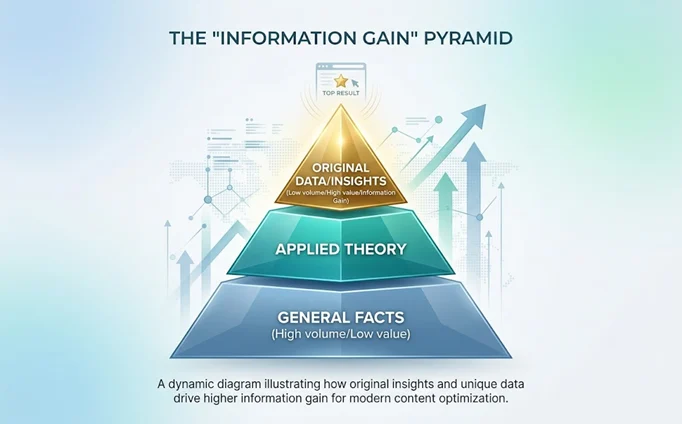
If you are publishing your report online or as a guest post, you must consider Information Gain. Google’s recent updates prioritize content that provides unique value that isn’t already on the first page of search results. To achieve this, your technical report should include original case studies, unique datasets, or a proprietary technical analysis framework.
Instead of rehashing existing theories, apply them to a new context. For example, instead of writing about “How to write a report,” write about “How to write a report for the 2026 Renewable Energy Sector.” This specificity targets high-intent keywords and establishes you as a thought leader.
Precision, Polish, and Professionalism
As we look toward the future of professional communication, the “High-Stakes Technical Report” remains the gold standard for proving competence. It is a combination of deep research, strategic structure, and visual storytelling. By mastering these elements, you aren’t just finishing an assignment; you are building a professional portfolio that demonstrates you can handle the most complex challenges of the modern world.
Every successful project ends with a final review. Before submission, read your report aloud. This is the most effective way to catch awkward phrasing and logic gaps. If you find yourself losing breath in the middle of a sentence, that sentence is too long for a global audience.
In conclusion, the art of technical reporting is the art of clarity. By respecting the academic research standards, utilizing data visualization, and maintaining a strict thesis structure and formatting, you ensure that your voice is heard in the crowded world of information. The transition from student to expert is paved with well-documented, highly accurate, and visually engaging technical reports.
Frequently Asked Questions
What defines a report as “high-stakes”?
A high-stakes report is a document where the findings significantly influence critical outcomes, such as academic grading, project funding, or professional certifications. These reports require a higher level of accuracy, objective analysis, and structural integrity than standard writing tasks.
How can I make complex data easier for readers to digest?
The most effective method is through strategic data visualization. Using charts, flowcharts, and tables allows readers to identify patterns and key takeaways quickly without getting lost in dense blocks of raw numbers.
Why is the executive summary considered the most important section?
The executive summary serves as a standalone condensed version of the entire document. It allows busy decision-makers to understand the core problem, the methodology used, and the final recommendations without having to read the technical details of every chapter.
What is the best way to ensure a report meets international standards?
To achieve a global standard, maintain a neutral tone and prioritize clarity over complex vocabulary. Using a consistent structural framework and verifying that every claim is supported by credible evidence ensures the document is respected by diverse audiences worldwide.
About The Author
Alexander Anderson is a senior academic strategist and digital trend analyst at MyAssignmentHelp. With a focus on high-level communication and data-driven insights, he specializes in helping individuals navigate complex projects with professional precision.

