

Red light therapy has moved well beyond clinical settings. What was once reserved for dermatology offices and sports medicine clinics now sits comfortably on a bathroom shelf or gym bag, available to anyone willing to invest in their wellness. As demand surges, so does the marketplace—and with it, a flood of red light therapy belts that range from budget-friendly basics to sophisticated devices marketed as medical-grade solutions.
For consumers trying to navigate this landscape, the challenge isn’t finding options—it’s understanding whether the distinction between medical-grade and standard belts actually matters. Reviews can point you in a direction, but only if you know what to look for. Terms like medical-grade LEDs, infrared light therapy, and irradiance levels get tossed around freely, sometimes with precision, sometimes as little more than marketing language.
This article cuts through the noise. By combining expert insights with a clear-eyed analysis of what real reviews reveal, we’ll break down exactly what separates these two categories, which features genuinely influence results, and how to make a confident, informed choice when selecting a home therapy device that aligns with your specific wellness goals.
The Science and Appeal of Red Light Therapy Belts
Red light therapy works by delivering specific wavelengths of light—typically between 630 and 850 nanometers—directly into the body’s tissues. At these wavelengths, photons penetrate the skin and are absorbed by mitochondria, the energy-producing centers of cells. This absorption stimulates ATP production, reduces oxidative stress, and triggers a cascade of biological responses that support tissue repair, reduce inflammation, and improve circulation. Infrared light therapy extends this principle deeper into the body, reaching muscle tissue and joints where standard visible-light wavelengths can’t penetrate effectively.
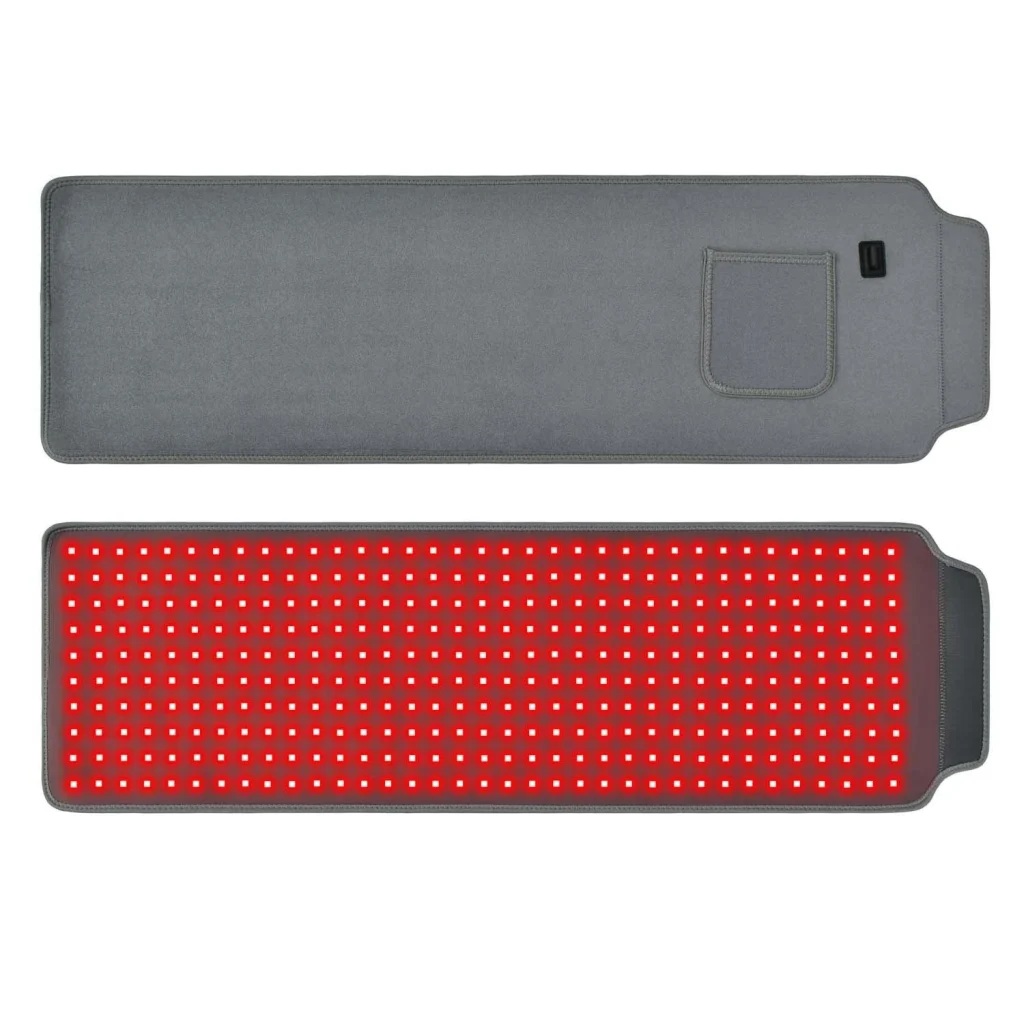
What’s driven the surge in consumer adoption isn’t just the science—it’s the packaging. Advances in LED miniaturization and flexible circuit design have made it possible to embed therapy-grade components into wearable formats. Belts, in particular, represent a smart evolution in home therapy devices because they conform to the body’s contours, allowing sustained, hands-free treatment over targeted areas like the lower back, abdomen, or hips. For someone managing chronic muscle soreness or pursuing recovery between workouts, that localized, consistent contact matters enormously.
For tech-savvy consumers already invested in biohacking and wellness optimization, red light therapy belts fit naturally into a broader health stack—offering measurable, research-backed results without requiring a clinic visit.
Defining the Divide: Medical-Grade vs. Standard Belts
The terms “medical-grade” and “standard” get applied to red light therapy belts with varying degrees of accuracy, which makes understanding the actual distinctions essential before trusting any product claim. At the core, the divide comes down to four factors: LED quality, power output, wavelength precision, and regulatory certification. Medical-grade belts are engineered to meet clinical benchmarks, while standard belts prioritize accessibility and affordability, often at the expense of therapeutic consistency.
Power output—measured as irradiance in milliwatts per square centimeter—is one of the most telling differentiators. Medical-grade devices typically deliver irradiance levels sufficient to drive meaningful photobiomodulation in deep tissue, whereas many standard belts hover at lower output levels that may only affect surface skin layers. Safety certifications also diverge sharply. Devices marketed as medical-grade are often FDA-cleared or CE-marked, meaning they’ve undergone independent testing for both efficacy and user safety. Standard belts frequently lack these designations, relying instead on general consumer electronics compliance standards that don’t evaluate therapeutic performance.
Durability and build quality follow a similar pattern. Medical-grade belts tend to use heat-dissipating materials and reinforced flexible circuits that maintain consistent LED output over thousands of hours. Standard options may use lighter construction that degrades faster under regular use, affecting both longevity and treatment reliability.
What Are Medical-Grade LEDs and Why Do They Matter?
Medical-grade LEDs are manufactured to tight tolerances, meaning their emitted wavelengths stay within a narrow band—often plus or minus five nanometers of the target frequency. This precision matters because cellular photoreceptors respond to specific wavelength ranges; even modest deviation can reduce absorption efficiency in mitochondria. These LEDs also maintain higher optical density per unit area, delivering more photons to tissue per session. Combined with clinical backing from peer-reviewed studies validating their specific output profiles, medical-grade LEDs represent a meaningful step up for users targeting deeper tissue repair, inflammation reduction, or accelerated recovery.
Understanding Standard Belts and Common Infrared Light Therapy Features
Standard red light therapy belts typically use commercially available LEDs with broader wavelength tolerances and lower power density. They often include basic infrared light therapy settings—commonly a single near-infrared wavelength around 850nm paired with visible red—but without the calibration rigor found in clinical-tier devices. For general wellness applications like mild relaxation or superficial skin support, this level of performance can be adequate. However, users pursuing specific therapeutic outcomes, such as joint pain reduction or significant muscle recovery, may find that standard belts deliver inconsistent results, particularly over extended use when LED output can diminish without the quality controls built into higher-grade alternatives.
Decoding Red Light Therapy Belt Reviews: What Truly Counts
Reading reviews for red light therapy belts requires more than scanning star ratings. Most users don’t have the technical background to evaluate what they’re experiencing, which means glowing testimonials can reflect placebo satisfaction just as easily as genuine therapeutic results. To extract useful signal from the noise, you need to know which review elements carry actual weight.
Start with LED specifications. Reviews that mention specific wavelengths—630nm for red light, 850nm for near-infrared—are written by users who’ve engaged with the product technically. When reviewers describe results consistent with those wavelengths, such as improved skin texture at red-light frequencies or deeper muscle relief attributed to near-infrared penetration, that alignment lends credibility. Conversely, vague claims like “it feels warm and relaxing” tell you little about therapeutic efficacy.
Pain relief and recovery outcomes are among the most commonly reported benefits, but context matters. A reviewer who describes reduced lower back stiffness after consistent three-week use, and cross-references the belt’s irradiance output, offers far more useful information than someone reporting overnight results after a single session. Durability signals are equally telling—look for long-term reviews that comment on LED brightness over time, strap integrity, and controller reliability. These details reflect real-world performance that manufacturers don’t volunteer upfront.
Ease of use matters too, especially for wearable therapy devices meant for daily integration. Reviews that discuss strap adjustability, session timer reliability, and heat management during extended wear reveal whether a belt actually fits into a routine. Prioritize verified purchase reviews on multiple platforms, and treat clusters of similar complaints—particularly around declining output or connectivity issues—as early warning signs about build quality rather than isolated anomalies.
Comparative Benefits for the Tech-Savvy Consumer
For consumers who approach health with the same analytical rigor they bring to evaluating software or training gear, the medical-grade versus standard decision isn’t just about price—it’s about return on investment. Medical-grade belts offer a compounding advantage: higher irradiance levels mean faster accumulation of therapeutic dose per session, which translates to shorter timelines for measurable outcomes like reduced inflammation or improved tissue recovery. Clinical validation adds another layer of confidence, since the device’s output has been independently tested rather than self-reported by the manufacturer.
Standard belts, by contrast, serve a legitimate purpose for users whose goals are less intensive. If the objective is general relaxation, mild circulation support, or occasional use as part of a broader recovery routine, a well-reviewed standard belt can deliver adequate results at a fraction of the cost. The trade-off is predictability—without rigorous quality controls, performance can vary unit to unit and degrade over months of regular use.
Where medical-grade devices clearly pull ahead is in consistency and longevity, two qualities that matter enormously to anyone integrating therapy into a disciplined health protocol. For biohackers tracking HRV, recovery metrics, or inflammation markers, that reliability converts directly into cleaner data and more confident optimization—making the higher upfront investment a rational choice rather than a luxury indulgence.
Your Step-by-Step Guide to Selecting the Right Home Therapy Device
Choosing the right red light therapy belt starts with clarity about what you’re actually trying to achieve. Someone managing chronic lower back pain needs a different device than someone using light therapy for general recovery support. Define your primary goal first—whether that’s targeted inflammation reduction, post-workout muscle repair, or broader wellness maintenance—because that single decision shapes every specification worth evaluating.
Next, research reviews with technical intent. Search specifically for mentions of wavelength ranges, irradiance output, and certification status like FDA clearance or CE marking. Reviews that reference these details signal informed users, and their outcome reports carry more weight. When comparing devices, prioritize irradiance data—look for output specifications published by the manufacturer, as brands like YouLumi make a point of providing detailed technical documentation that enables meaningful cross-comparison, and check those figures against independent reviews reporting real-world results rather than just unboxing impressions.
Evaluate safety features and build materials before finalizing any choice. Heat management, strap durability, and control interface reliability all determine whether a belt stays functional through months of consistent use. Budget matters, but frame it against long-term value: a medical-grade device with a two-year warranty and stable LED output often costs less over time than a standard belt replaced annually. Finally, verify warranty terms and customer support responsiveness—these practical details reveal how much confidence a manufacturer places in their own product.
Making the Right Red Light Therapy Belt Choice
The gap between medical-grade and standard red light therapy belts is real, and reviews—when read critically—make that gap visible. Medical-grade devices bring wavelength precision, clinically validated irradiance levels, and regulatory certifications that standard belts simply don’t match. Standard options, meanwhile, fill a legitimate space for users with modest goals and tighter budgets, provided expectations are calibrated accordingly.
What reviews consistently reveal is that outcomes depend less on marketing language and more on measurable specifications. Users who see meaningful results cite consistent LED output, appropriate wavelengths for their target tissue, and sustained device performance over months of use. Those who feel let down often chose based on price alone, without evaluating the technical details that determine whether a belt actually delivers therapeutic dose or just surface-level warmth.
For tech-savvy consumers serious about integrating red light therapy into a health protocol, the guidance is straightforward: prioritize verified specifications over brand claims, lean on technically grounded reviews, and weigh long-term value against upfront cost. A device that performs reliably for two years at clinical standards outperforms three budget replacements in both results and total expenditure. Approach this purchase the same way you’d evaluate any performance tool—with data, skepticism toward vague promises, and clarity about what you’re actually optimizing for.

