

Modern AV installations have grown remarkably in both complexity and scale, pushing the boundaries of what multi-display environments can achieve. From sprawling corporate lobbies to immersive command centers, video walls now span dozens of screens arranged in configurations that would have seemed impossible a decade ago. But how do integrators manage these expansive, dynamic canvases while maintaining pixel-perfect synchronization and seamless content flow? The answer lies in the video wall processor—the intelligent brain orchestrating every frame, every pixel, and every transition across an entire display array. As demands for higher resolution, tighter integration with networked AV ecosystems, and greater creative flexibility intensify, video wall processor technology is evolving at an accelerating pace. New capabilities in IP-based signal distribution, AI-driven calibration, and cloud management are reshaping what these systems can deliver. Understanding where this technology is headed is essential for AV professionals designing installations that must perform flawlessly today while remaining adaptable for tomorrow’s requirements.
What is a Video Wall Processor? The Central Command Unit
A video wall processor is a specialized computing device designed to accept multiple input signals and intelligently distribute, scale, and position them across an array of displays functioning as a unified visual surface. While the term is sometimes used interchangeably with “video wall controller,” a true processor offers significantly more computational power and flexibility than basic controllers, which typically handle fixed grid arrangements with limited input manipulation.
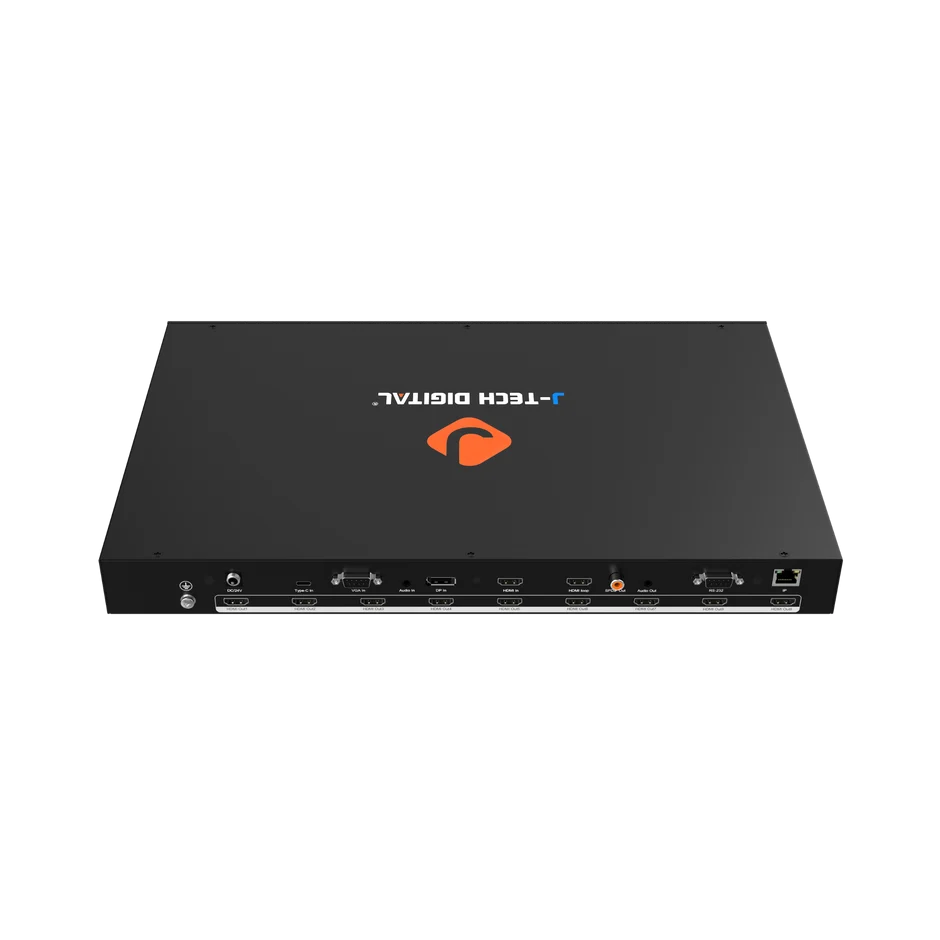
At its core, the video wall processor ingests content from diverse sources—live camera feeds, digital signage players, computer desktops, streaming media—and maps that content precisely where it needs to appear on the display canvas. This involves real-time scaling to match output resolutions, cropping to fit specific screen regions, and rotation for portrait-mounted panels. The processor also handles bezel compensation, adjusting image geometry so that content appears continuous despite the physical gaps between adjacent display bezels. Windowing capabilities allow operators to open, resize, and layer multiple sources on the wall simultaneously, creating dynamic compositions that respond to operational needs in real time.
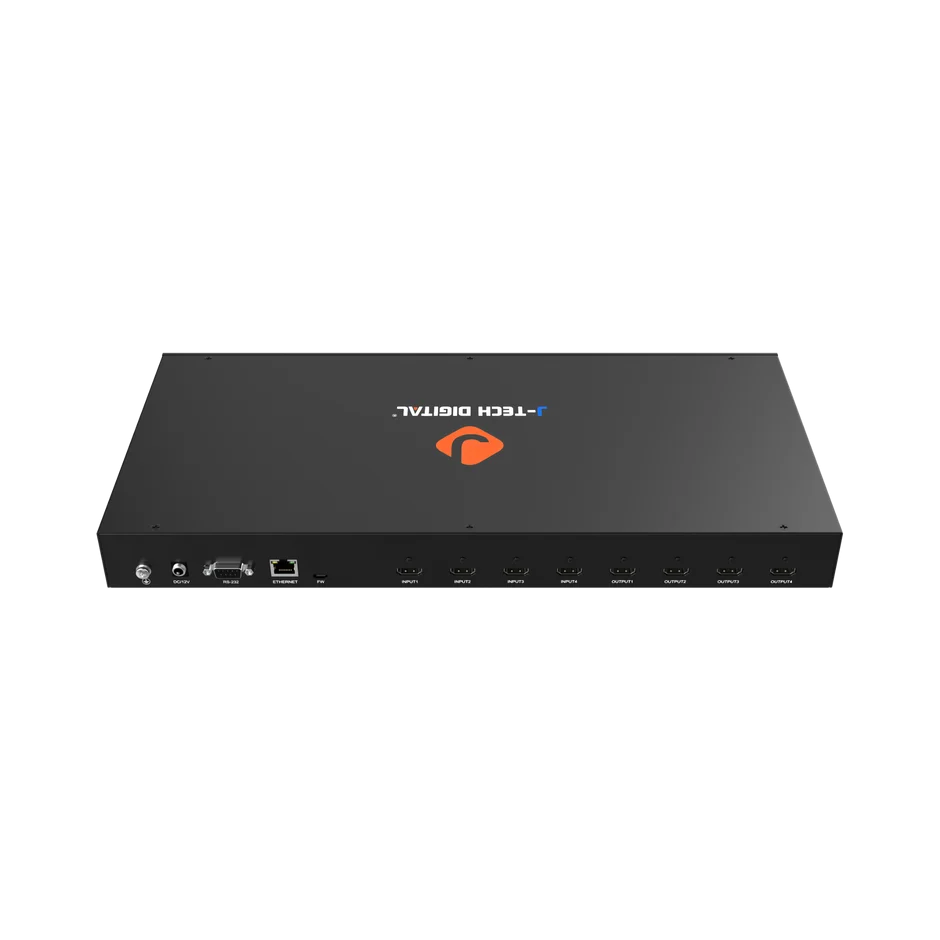
Contrast this with a simple HDMI matrix switch, which merely routes a single source to a single display without any processing, scaling, or compositing. A matrix switch cannot split one image across multiple screens, overlay sources, or adjust for physical display geometry. The video wall processor transcends these limitations by functioning as a dedicated rendering engine—one that transforms raw inputs into a cohesive, synchronized visual experience across every panel in the array, regardless of how many screens are involved or how content needs to be arranged.
Key Features Driving Modern Video Wall Setups
For AV professionals specifying video wall processors, several advanced capabilities separate professional-grade solutions from consumer-level alternatives. Seamless content synchronization sits at the top of this list—the processor must ensure that frames arriving from disparate sources display simultaneously across all panels without tearing, stuttering, or visible latency differences between adjacent screens. This requires precise timing control at the hardware level, often through genlock or frame-lock mechanisms that synchronize output refresh cycles down to the microsecond.
Resolution support has become a defining differentiator as display technology advances. Current installations routinely demand native 4K input processing, with forward-looking projects already requiring 8K pipeline support. HDR compatibility adds another layer of complexity, as the processor must preserve wide color gamut and high dynamic range metadata throughout its signal chain rather than clipping or tone-mapping prematurely. Input flexibility is equally critical—a robust processor accepts HDMI 2.1, DisplayPort 1.4, 12G-SDI for broadcast environments, and increasingly, IP streams via NDI or SMPTE ST 2110 protocols, all simultaneously without requiring manual switching or reconfiguration. Manufacturers like J-Tech Digital Inc have contributed to this space by developing signal distribution and processing equipment that addresses the diverse connectivity demands of modern multi-display environments.
Advanced display control allows operators to manage individual panels independently—adjusting brightness, color temperature, and input assignments per screen—while also recalling complex presets instantly for different operational scenarios. A control room might shift from a surveillance layout to a briefing configuration with a single command. Reliability features such as redundant power supplies, hot-swappable input cards, and automatic failover routing ensure that mission-critical installations remain operational even when individual components fail, eliminating single points of failure that could bring down an entire wall during critical moments.
Beyond Basic Grids: Advanced Layouts and Content Management
Modern processors have moved well beyond the rigid rectangular grid arrangements that defined earlier generations. Today’s systems support L-shaped configurations wrapping around architectural corners, vertical columns flanking entrances, curved arrays following building contours, and artistic mosaic arrangements mixing different panel sizes. The processor maps pixel coordinates across these irregular geometries, ensuring content flows naturally regardless of physical display placement. Operators can treat the entire wall as a single unified canvas—stretching a panoramic landscape across every panel—or divide it into independent zones, each displaying different sources with unique aspect ratios and resolutions. This dual capability enables scenarios where a corporate experience center runs branded background content wall-wide while simultaneously presenting localized data dashboards, live video feeds, and interactive application windows in designated regions, all managed through intuitive drag-and-drop interfaces that update compositions in real time.
Designing and Implementing a Robust Video Wall Solution
Successful video wall deployments begin long before any hardware arrives on site. AV professionals who follow a structured implementation methodology avoid costly rework and deliver systems that meet both immediate operational needs and long-term scalability goals. The process starts with a thorough assessment phase: defining the primary audience, cataloging content types and source devices, measuring the physical environment, and understanding ambient lighting conditions that affect display selection. A command center monitoring live surveillance feeds around the clock demands different processing headroom than a retail flagship store cycling branded content on a schedule.
Processor selection flows directly from this assessment. Installations requiring more than a dozen simultaneous sources, mixed-resolution inputs, or real-time window manipulation need processors with dedicated GPU-class rendering engines and expandable I/O card slots. Smaller deployments with fixed layouts may function well with compact, fixed-configuration units. Regardless of scale, verify that the chosen processor supports your required output resolution natively—upscaling at the processor stage introduces artifacts that compound across a multi-panel array. System design must account for structured cabling infrastructure, with cable runs planned for maximum signal integrity. SDI environments tolerate longer distances than HDMI, while IP-based architectures shift bandwidth requirements onto network switches that need proper IGMP snooping and QoS configuration. Integration with facility-wide control systems—Crestron, Extron, AMX, or Q-SYS—requires confirming API availability and control protocol compatibility during the specification stage, not after installation.
Physical video wall setup involves precise mechanical mounting to ensure uniform panel alignment, followed by careful connection of all signal and power infrastructure. Once powered, initial configuration includes defining the display array topology within the processor software, assigning output ports to physical panel positions, and setting bezel compensation values measured from the actual display hardware on site.
Step-by-Step: Ensuring Synchronized Content Across the Video Wall
Achieving frame-accurate synchronization across every panel requires deliberate configuration rather than relying on default settings. First, confirm that your processor supports genlock or frame-lock output synchronization and enable it across all output channels—this forces every display to refresh simultaneously, eliminating the visible tearing that occurs when adjacent panels render frames milliseconds apart. Second, configure input latency buffering so that sources arriving with different inherent delays are time-aligned before reaching the output stage; most professional processors offer adjustable frame buffers per input specifically for this purpose. Third, use the processor’s built-in alignment and calibration tools to verify color uniformity and geometric accuracy across the entire array, correcting any panel-to-panel brightness or color temperature drift. Finally, test synchronization with fast-moving dynamic content—scrolling tickers, video playback, and animated transitions reveal timing issues that static test patterns cannot expose. Run these tests at the frame rates and resolutions matching actual operational content to validate performance under real-world conditions.
The Future of Video Wall Processors: Trends and Innovations
The trajectory of video wall processor development points decisively toward IP-native architectures. Traditional baseband connectivity—where dedicated cables carry signals point-to-point from processor to display—is giving way to systems built from the ground up around networked signal distribution. NDI-enabled processors can ingest and output video streams over standard Ethernet infrastructure, eliminating the need for proprietary cabling while enabling virtually unlimited scalability. An integrator can add sources or displays to the system by simply connecting them to the network, rather than physically installing new input cards or running additional cable runs. This shift aligns with broader AV-over-IP ecosystems built on SMPTE ST 2110 and IPMX standards, where video wall processors function as intelligent nodes within a facility-wide media network rather than isolated hardware islands.
Artificial intelligence is poised to transform how these systems calibrate and optimize themselves. Current processors require manual color matching and geometric alignment—a time-consuming process that must be repeated as panels age unevenly. AI-driven calibration uses camera feedback loops to continuously monitor uniformity and automatically adjust individual panel parameters without human intervention, maintaining visual consistency over the installation’s entire lifespan. Beyond calibration, content-aware scaling algorithms powered by machine learning can intelligently upscale lower-resolution sources, recognizing whether content contains text, faces, or motion graphics and applying optimized processing for each type rather than using generic scaling filters.
Cloud-based management platforms are emerging that allow operators to configure, monitor, and troubleshoot video wall processors remotely through browser interfaces. This enables centralized oversight of distributed installations—a retail chain managing hundreds of video walls across locations from a single dashboard, pushing layout changes and firmware updates simultaneously. Energy efficiency improvements also deserve attention, as newer processors achieve greater computational throughput while consuming less power through advanced chipset architectures, reducing both operational costs and cooling requirements in thermally constrained environments like broadcast studios and enclosed retail spaces.
The Video Wall Processor as the Indispensable Intelligence Layer for AV
The video wall processor has undergone a remarkable transformation—evolving from a straightforward device that split signals across fixed display grids into an intelligent, networked system hub capable of orchestrating complex visual environments with minimal human intervention. Today, it serves as the critical nexus where content sources, display hardware, control platforms, and network infrastructure converge into a unified, manageable whole. For AV professionals, mastering the capabilities and emerging trajectories of these processors is no longer optional; it is fundamental to delivering installations that satisfy demanding clients while standing resilient against technological obsolescence. The convergence of IP-native architectures, AI-powered automation, and cloud-based oversight is redefining what a single processor can accomplish within a broader AV ecosystem. As display technologies push toward higher pixel densities, larger canvas sizes, and more creative physical configurations, the processor will remain the indispensable intelligence layer ensuring that every pixel lands precisely where it belongs. Professionals who invest in understanding these advancements today will be best positioned to design the immersive, adaptive visual experiences that audiences and operators will expect tomorrow.

