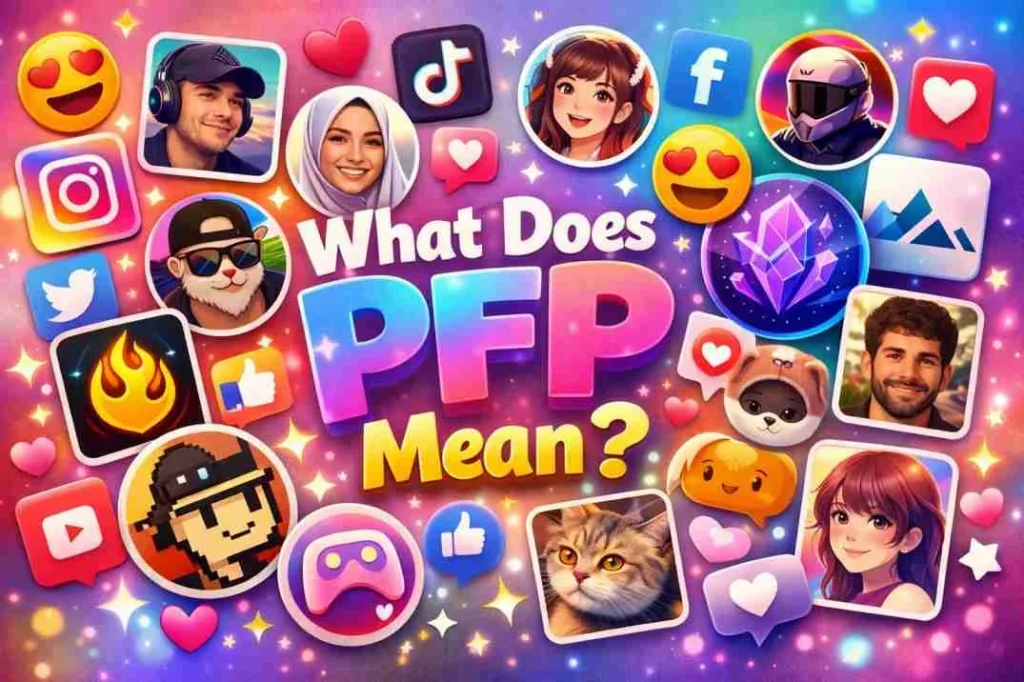

PFP stands for “Profile Picture.” It is the image used to represent a person, brand, or entity on social media, messaging apps, forums, and online communities. A PFP acts as a digital identity, reflecting personality, mood, or professional branding and making your presence recognizable in the online world.
In today’s digital age, your PFP is often the first thing people notice about you online. Whether it’s a playful selfie, a professional headshot, a cartoon avatar, or a logo, it communicates who you are without saying a single word. Even small details, like the colors or expressions in your PFP, can influence how others perceive you.
The Origin of PFP
The term PFP emerged alongside the rise of social media and online forums. As users sought faster ways to communicate online, abbreviations like PFP became common. Early internet communities and chatrooms encouraged shorthand phrases to save time when typing.
Some key moments in the origin of PFP:
- Early Online Forums: Sites like AOL, MSN Messenger, and early gaming forums allowed users to upload avatars. People started calling them PFPs to refer to profile images quickly.
- Rise of Social Media: Platforms like Facebook, Instagram, and Twitter made profile pictures a standard part of digital identity. Users wanted to update their PFPs often, making the term more common.
- Gaming and Digital Art Communities: Custom avatars became extremely popular in gaming and artistic communities, especially on Discord, TikTok, and DeviantArt. “PFP” became the default term for these images.
Today, PFP is globally recognized. Its simplicity and convenience make it a staple of online language.
Why PFPs Are Important
Your PFP is more than a small image. It’s your first impression in the digital world, often determining whether people feel connected to you, follow your account, or trust your brand.
Here’s why PFP matters:
- Identity Representation: Your PFP visually identifies you online.
- Branding: Businesses, creators, and influencers use consistent PFPs to strengthen brand recognition.
- Engagement: Eye-catching images can boost likes, follows, or messages.
- Recognition in Communities: On platforms like Discord or Reddit, your PFP helps friends and followers quickly identify you.
For professionals, a well-chosen PFP can improve credibility, especially on LinkedIn, company websites, and professional social media. For casual users, it’s a way to show personality, humor, or creativity.
How PFP Is Commonly Used
The use of PFP varies depending on the platform and audience. Let’s look at how PFP appears across different contexts:
| Platform | Example Usage | Tone |
|---|---|---|
| “Just changed my PFP, feeling cute 😎” | Friendly, casual | |
| Discord | “Update your PFP before joining the server!” | Neutral, instructional |
| “Choose a professional PFP for networking success” | Professional | |
| “Check out my new PFP for my feed aesthetics ✨” | Casual, creative | |
| “I finally updated my DP 😅” | Informal, regional variant |
Notice how tone shifts depending on the context. PFP is casual and widely understood on most platforms, while formal platforms prefer “profile picture.”
Examples of PFP in Context
Let’s explore real-world examples to see how PFP is used in everyday online communication:
- Friendly or casual usage:
- “I just changed my PFP to a cat picture 🐱! Isn’t it adorable?”
- This conveys personality and is perfect for friends, family, or casual social circles.
- Neutral or professional usage:
- “Ensure your PFP is clear and professional for networking purposes on LinkedIn.”
- Professional, instructional, and focused on credibility.
- Dismissive or negative tone:
- “That PFP doesn’t really match your profile, maybe try something else.”
- Could indicate mild criticism, usually in casual online conversations.
Your PFP choice communicates more than just an image. Colors, style, and subject matter all affect perception. A playful cartoon avatar may be fun on Discord but might not be suitable for LinkedIn.
PFP Variations and Related Terms
Sometimes PFP can be confused with or related to other terms. Understanding these will help you navigate online communication more effectively.
| Term | Meaning | Notes |
|---|---|---|
| Avatar | A digital representation of yourself | Often used in gaming or VR |
| DP | Display Picture | Popular in India, similar to PFP |
| Profile Pic | Full form of PFP | Interchangeable with PFP |
| Icon | Small representative image | Often used in forums or apps |
While terms overlap, PFP is the most recognized globally. Avatar is more common in gaming, DP is more region-specific, and profile pic is a more formal alternative.
Alternate Meanings of PFP
Although profile picture is the primary meaning of PFP in online contexts, it can have other interpretations in specialized fields:
| Abbreviation | Meaning | Context |
|---|---|---|
| PFP | Pay-for-Performance | Business or HR context |
| PFP | Public Financial Planning | Finance or investment context |
| PFP | Prepare for Print | Graphic design or printing |
When communicating online casually or professionally, PFP almost always refers to a profile picture, but awareness of other definitions is useful in specialized settings.
Tips for Choosing the Perfect PFP
Selecting the right PFP can significantly impact how others perceive you online. Here are some practical tips:
- Keep it Clear: Avoid blurry or low-resolution images. Your face or logo should be recognizable.
- Show Personality or Brand Identity: Reflect who you are or your brand’s values.
- Use Strong Contrast: Make your PFP stand out, especially as most social media images are small.
- Consider Platform Norms: Professional headshots on LinkedIn, artistic avatars on Discord, or fun selfies on TikTok.
- Update Periodically: Refresh your PFP to reflect changes in style, branding, or personal expression.
These tips help ensure your PFP is effective across different online spaces.
Popular PFP Styles Across Platforms
| Style | Description | Ideal Platform |
|---|---|---|
| Selfie | Personal photo showing your face | Instagram, WhatsApp, Facebook |
| Logo | Brand or company icon | LinkedIn, Twitter, websites |
| Cartoon/Anime | Illustrated or creative avatars | Discord, TikTok, gaming communities |
| Nature/Abstract | Scenic or artistic images | Pinterest, blogs, casual forums |
| Character/Icon | Pop culture or fictional character | Gaming, fan communities |
Each PFP style suits a particular audience. Choosing the right style helps you communicate effectively without words.
Comparison With Similar Terms
| Term | Use | Key Difference |
|---|---|---|
| PFP | Social media and online communities | Short, casual, globally recognized |
| DP | Messaging apps, regional preference | Popular in India, similar meaning |
| Avatar | Gaming, VR, creative communities | Stylized or artistic representation |
| Profile Pic | Formal documentation or professional platforms | Full form, more formal |
Understanding these distinctions allows you to choose the right term for your context and ensures clear communication.
Professional Alternatives to PFP
While PFP is casual, professional or business contexts may call for more formal terminology:
- Profile Picture: Standard and formal, suitable for emails, LinkedIn, or websites.
- Professional Headshot: Ideal for resumes, LinkedIn, company directories, and professional networking.
- Avatar: Works in creative industries, gaming, or when representing a brand or persona digitally.
Choosing the correct term ensures clarity and professionalism.
FAQs
1. What does PFP stand for?
PFP stands for Profile Picture, which is the image used to represent you on social media, messaging apps, or online platforms.
2. How do I create a good PFP?
A good PFP should be clear, high-quality, and representative of your personality or brand. Ensure good lighting, contrast, and appropriate expression.
3. Can PFP be an avatar?
Yes. Avatars are often stylized or illustrated images used as PFPs, especially in gaming or online communities.
4. Is PFP suitable for professional use?
While casual, PFP is understood professionally. Using full terms like “profile picture” or “headshot” is more suitable for LinkedIn or formal profiles.
5. Are there other meanings of PFP?
Yes, but context matters. Other meanings include pay-for-performance in business or prepare-for-print in design. Online, PFP almost always means profile picture.
6. How often should I change my PFP?
It’s optional. Update when your personal style, brand, or professional image changes. Frequent updates can reflect trends or mood.
7. Difference between PFP and DP?
PFP (Profile Picture) is globally used. DP (Display Picture) is similar but more common in regions like India. Both refer to the same concept.
8. Why is a PFP important on social media?
It helps others identify you, increases engagement, and communicates personality or branding visually. A good PFP can even influence trust and perception.
Conclusion
Understanding what PFP means is essential in today’s digital world. It’s a small image, but its impact is significant. Your PFP serves as a visual introduction, whether for social media, messaging apps, forums, or professional networking.
Key Takeaways:
- PFP = Profile Picture, universally understood online.
- Choose a PFP that’s clear, representative, and platform-appropriate.
- Related terms include DP, avatar, and profile pic; context determines usage.
- Professional contexts may prefer formal alternatives like “profile picture” or “headshot.”
A well-chosen PFP enhances your digital identity, ensures recognition, and communicates personality, mood, or branding instantly.
Read More Related Articles:
- Shaunie O’Neal Net Worth: From NBA Wife to Media Mogul In 2026
- Cordae Net Worth: Income, Career & Wealth Breakdown In 2026
- Oracle Net Worth: Tech Giant Valuation & Financial Power In 2026