

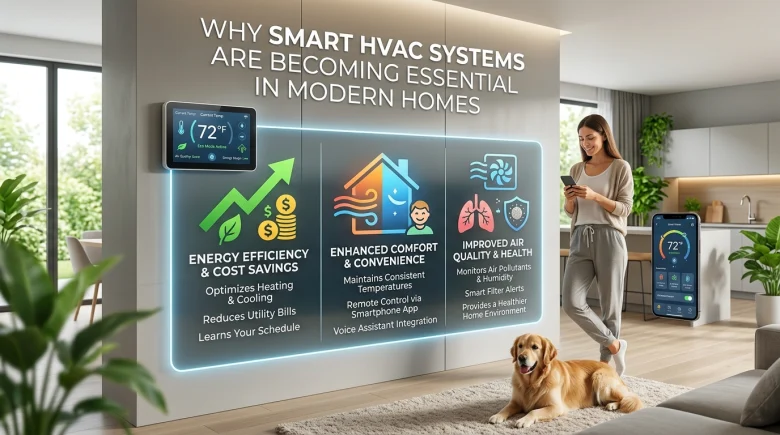
Modern homes are becoming smarter in nearly every way imaginable. From voice-controlled lighting and automated security systems to AI-powered appliances, homeowners are increasingly investing in technology that improves convenience, efficiency, and comfort.
One of the biggest transformations happening inside homes today involves something many people rely on every single day but rarely think about until it stops working: the HVAC system.
Heating, ventilation, and air conditioning systems are no longer just basic temperature-control tools. Smart HVAC technology is changing how homeowners manage indoor comfort, energy efficiency, air quality, and long-term energy costs.
As utility bills rise and homeowners prioritize smarter living spaces, smart HVAC systems are quickly becoming an essential part of modern home design rather than an optional upgrade.
This article explores why smart HVAC systems are growing in popularity, how they work, and why they are becoming one of the most important investments homeowners can make in 2026 and beyond.
What Is a Smart HVAC System?
A smart HVAC system combines traditional heating and cooling equipment with advanced technology designed to automate and optimize indoor climate control.
Unlike older systems that simply turn on and off based on thermostat settings, smart HVAC systems can:
- learn homeowner behavior
- adjust temperatures automatically
- monitor energy usage
- detect efficiency problems
- integrate with mobile devices
- improve indoor air quality management
Many systems now connect to:
- smartphones
- smart home hubs
- Wi-Fi networks
- voice assistants
This allows homeowners to control home comfort remotely and make real-time adjustments from virtually anywhere.
Why Traditional HVAC Systems Are No Longer Enough
Older HVAC systems were designed primarily for basic temperature regulation. While they still provide heating and cooling, they often lack:
- energy optimization
- humidity balancing
- zoning capabilities
- automated scheduling
- system diagnostics
- remote access features
As energy costs continue increasing, inefficient systems become more expensive to operate.
Homeowners today want more than cooling and heating—they want:
- lower utility bills
- personalized comfort
- healthier indoor air
- predictive maintenance alerts
- smart automation
This shift in homeowner expectations is driving the rapid adoption of smart HVAC technology.
Rising Energy Costs Are Changing Homeowner Priorities
One of the biggest reasons smart HVAC systems are becoming essential is energy efficiency.
Heating and cooling typically account for one of the largest portions of residential energy consumption. Inefficient systems can dramatically increase monthly utility costs, especially in regions with extreme climates like Texas.
Smart HVAC technology helps reduce waste by:
- automatically adjusting temperatures
- optimizing runtime
- reducing unnecessary cycling
- monitoring energy usage patterns
For homeowners dealing with intense summer heat, professional air conditioning services houston tx often include smart system recommendations designed to improve efficiency while maintaining indoor comfort during peak temperatures.
As utility rates continue to rise nationwide, energy-efficient HVAC systems are becoming less of a luxury and more of a financial necessity.
Smart Thermostats Are Changing Everything
One of the most recognizable features of smart HVAC systems is the smart thermostat.
Unlike traditional thermostats, smart thermostats can:
- learn daily routines
- create automated schedules
- detect when occupants leave the home
- optimize cooling and heating cycles
- provide detailed energy reports
Some systems even use AI-driven learning algorithms to improve efficiency over time.
For example:
- temperatures may automatically lower while homeowners sleep
- cooling may reduce while the house is empty
- systems may adjust based on weather conditions
This automation creates both convenience and long-term savings.
Indoor Air Quality Is Becoming a Bigger Concern
Modern homeowners are increasingly aware of indoor air quality and its impact on health.
Poor indoor air quality can contribute to:
- allergies
- respiratory irritation
- fatigue
- poor sleep quality
- humidity problems
Smart HVAC systems help improve indoor air management by monitoring:
- humidity levels
- filtration performance
- airflow efficiency
- ventilation balance
Advanced systems can also integrate:
- air purifiers
- humidity control systems
- smart filtration technology
As health-focused home upgrades continue growing in popularity, indoor air quality features are becoming major selling points for smart HVAC systems.
Smart HVAC Systems Improve Comfort Consistency
One of the most frustrating problems in older homes is uneven temperatures.
Many homeowners experience:
- hot upstairs rooms
- cold downstairs spaces
- inconsistent airflow
- rooms that never feel comfortable
Smart HVAC systems solve many of these issues through zoning technology.
Zoning allows homeowners to:
- control temperatures room by room
- reduce unnecessary cooling in unused areas
- customize comfort preferences
This creates more balanced indoor environments while improving efficiency.
Smart Systems Can Detect Problems Early
Traditional HVAC systems usually reveal problems only after something breaks.
Smart systems, however, can often identify issues before major failures happen.
Some systems provide alerts for:
- clogged filters
- airflow restrictions
- refrigerant issues
- abnormal energy usage
- maintenance reminders
This predictive capability helps homeowners avoid expensive emergency repairs.
Routine servicing combined with smart monitoring allows HVAC systems to operate more reliably over longer periods.
For ductless systems specifically, routine ductless mini split maintenance houston helps ensure sensors, airflow systems, and cooling performance continue operating efficiently within smart home environments.
If system issues are ignored too long, homeowners may eventually require professional ductless mini split repair houston services to restore efficiency and maintain consistent indoor comfort.
The Rise of Ductless Smart Cooling Solutions
Another reason smart HVAC technology is growing rapidly is the popularity of ductless systems.
Many homeowners are turning to ductless mini split houston solutions because they provide:
- zoned temperature control
- energy efficiency
- flexible installation options
- quieter operation
- smart thermostat integration
Ductless systems are especially useful for:
- home additions
- garages
- offices
- older homes without ductwork
- multi-zone cooling setups
As homeowners prioritize customization and energy savings, ductless technology continues expanding in popularity.
Smart HVAC Systems Support Sustainable Living
Sustainability has become a major factor in modern home upgrades.
Homeowners are increasingly looking for ways to:
- reduce energy waste
- lower carbon footprints
- improve efficiency
- support eco-friendly living
Smart HVAC systems contribute by:
- optimizing energy usage
- reducing unnecessary runtime
- improving system efficiency
- lowering overall electricity consumption
Many newer systems also meet higher environmental efficiency standards compared to older HVAC equipment.
Why Smart HVAC Systems Matter in Texas
In Texas, HVAC systems face particularly demanding conditions due to:
- long summers
- high humidity
- extreme temperatures
- heavy system usage
Cooling systems often run for extended periods throughout the year, making efficiency extremely important.
Older systems may struggle to maintain:
- balanced temperatures
- humidity control
- consistent airflow
- affordable energy consumption
This is one reason many homeowners now invest in professional ductless mini split installation houston and other smart HVAC upgrades designed for modern energy demands.
In climates like Houston, smarter cooling technology can significantly improve comfort while reducing system strain.
Smart Homes Are Becoming the New Standard
As smart home technology becomes more mainstream, buyers increasingly expect modern automation features inside homes.
Smart HVAC systems now contribute to:
- higher property appeal
- improved energy ratings
- better home resale value
- enhanced buyer interest
For many homeowners, upgrading HVAC systems is no longer just about comfort—it is about future-proofing the home itself.
The Future of HVAC Technology
The future of HVAC technology is moving toward even greater automation and intelligence.
Emerging trends include:
- AI-driven climate optimization
- occupancy-based cooling systems
- predictive maintenance analytics
- voice-controlled automation
- energy grid integration
- advanced air purification systems
As technology continues evolving, smart HVAC systems will likely become standard in modern residential construction.
Final Thoughts
Smart HVAC systems are rapidly transforming modern homes by combining comfort, automation,energy efficiency, and healthier indoor living environments.
What once seemed like advanced luxury technology is quickly becoming an essential part of everyday homeownership.
As utility costs rise and homeowners seek smarter ways to manage indoor comfort, HVAC technology continues evolving to meet those demands. Features like smart thermostats, zoning systems, predictive maintenance, and energy monitoring are helping homeowners create more efficient and comfortable living spaces.
In regions with demanding climates like Texas, smart HVAC solutions can make a significant difference in both comfort and long-term operating costs.
The future of home comfort is no longer just about heating and cooling—it is about intelligent climate control designed for modern living.

