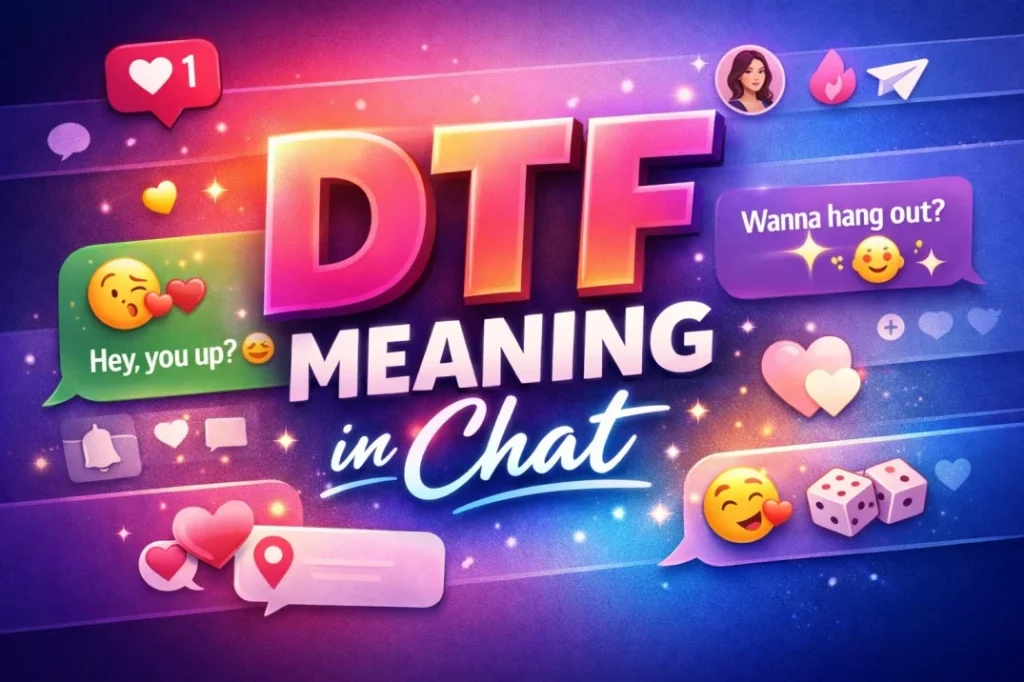

DTF stands for “Down To F*”**, commonly used in informal chat to ask if someone is open to a casual or intimate encounter. It can also sometimes be used more loosely to mean being “down” or willing to do something, depending on context.
Ever received a message with “DTF” and paused for a second, wondering what it actually means? You’re not alone. In today’s fast-moving digital conversations, slang terms can carry strong meanings, and DTF is one of the most misunderstood abbreviations in online chat culture.
While the abbreviation is short, its meaning can vary greatly depending on tone, relationship, and platform. Understanding how, when, and whether to use it is important to avoid awkward or inappropriate situations.
What Does DTF Mean in Chat?
At its core, DTF is a slang abbreviation used in texting and online conversations to express willingness, usually in a bold or suggestive way.
In most cases, it implies:
- Interest in a casual or intimate meetup
- A direct and informal approach to attraction
- A playful or provocative tone, depending on context
However, context changes everything. Among close friends, it may be used jokingly or casually, while in dating apps, it can be more direct and serious.
Origin of DTF
The term DTF gained mainstream popularity in the late 2000s and early 2010s, largely through pop culture and reality television.
- It became widely recognized through shows like Jersey Shore, where it was used casually in conversations about dating and hookups.
- Social media platforms and texting culture helped it spread rapidly among younger audiences.
- Dating apps later normalized its usage as shorthand for intentions.
Over time, DTF evolved from a niche slang term into a widely understood internet abbreviation, though still considered bold and sometimes controversial.
Why DTF Became So Popular
DTF spread quickly because it reflects how modern communication works:
- Short and direct: Saves time compared to longer explanations
- Emotionally clear: Removes ambiguity about intentions
- Fits digital culture: Matches fast-paced texting habits
- Pop culture influence: Reinforced by media and memes
However, its popularity also comes with risks of misinterpretation, especially across different cultures or levels of familiarity.
Usage of DTF in Chat
DTF is not a one-size-fits-all phrase. Its tone depends heavily on context and relationship.
1. Direct or serious tone
Used in dating or flirtatious conversations to express clear interest.
Example:
“Are you DTF tonight?”
This is straightforward and may be perceived as bold or even too forward.
2. Playful or joking tone
Among friends, DTF can be used humorously without serious intent.
Example:
“DTF for pizza and movies?”
Here, it simply means “Are you up for it?” with no suggestive meaning.
3. Sarcastic or teasing tone
Used ironically to exaggerate a situation.
Example:
“Oh, you finished your work early? DTF for more assignments?”
This adds humor rather than seriousness.
4. Misinterpreted tone
Sometimes, DTF can be misunderstood if the tone is unclear.
Example:
“DTF later?”
Without context, this may confuse or offend the receiver.
Table: Tone and Context of DTF
| Tone | Example Chat Text | Meaning/Interpretation |
|---|---|---|
| Direct | “Are you DTF tonight?” | Clear romantic or intimate interest |
| Playful | “DTF for ice cream?” | Casual, joking invitation |
| Sarcastic | “DTF for more homework?” | Humorous exaggeration |
| Neutral/Confusing | “DTF later?” | Ambiguous, depends on context |
When to Use DTF (and When Not To)
Understanding timing and context is key.
Appropriate situations
- Casual conversations with close friends who understand your humor
- Dating apps where direct communication is common
- Playful chats where tone is clearly lighthearted
Situations to avoid
- Professional or workplace conversations
- Messaging someone you don’t know well
- Formal or respectful environments
- Cross-cultural communication where slang may be misunderstood
Using DTF incorrectly can make a conversation uncomfortable or even offensive.
Comparison with Similar Chat Slang
DTF is often compared with other abbreviations that express willingness or humor. Here’s how it differs:
| Term | Meaning | Tone | Usage Context |
|---|---|---|---|
| DTF | Down to engage or willing | Bold, playful, sometimes suggestive | Casual chats, dating apps |
| DM me | Direct message me | Neutral | Social media conversations |
| Wanna | Want to | Casual | Everyday texting |
| HMU | Hit me up | Friendly | Invitations or communication |
| Netflix and chill | Casual hangout (sometimes implied meaning) | Playful, indirect | Social/dating context |
Extended Comparison Table: Tone and Intensity
| Term | Intensity Level | Directness | Typical Tone |
|---|---|---|---|
| DTF | High | Very direct | Bold, provocative |
| Netflix and chill | Medium | Indirect | Playful, suggestive |
| HMU | Low | Indirect | Friendly, casual |
| Wanna hang out | Low | Direct | Neutral, polite |
| LOL/😂 | None | Not related | Emotional reaction |
Insight:
DTF stands out because it is one of the most direct slang terms, making it powerful but risky.
Alternate Meanings of DTF
Although the slang meaning is the most common, DTF can have other meanings depending on context:
- Printing industry:
- DTF stands for Direct to Film, a printing technique used for custom apparel.
- Casual reinterpretation:
- Sometimes jokingly used as “Down To Fun” or “Down To Food” among friends.
- Business/technical contexts:
- Rarely used in formal settings but may appear as an acronym unrelated to chat slang.
Always rely on context to determine the intended meaning.
Polite or Professional Alternatives
Because DTF can be too direct, here are better alternatives depending on the situation:
- “Are you free to hang out?”
- “Would you like to meet up?”
- “Are you up for it?”
- “Let’s catch up sometime”
Table: Informal vs Polite Alternatives
| Informal Phrase | Polite Alternative |
|---|---|
| DTF? | Are you available? |
| You DTF tonight? | Would you like to meet later? |
| DTF for drinks? | Want to grab drinks? |
| DTF rn? | Are you free right now? |
These alternatives maintain clarity without sounding overly bold.
Real-World Examples of DTF in Conversations
1: Dating app
“Hey, you seem cool. Are you DTF tonight?”
Tone: Direct and bold
2: Friends joking
“DTF for burgers and Netflix?”
Tone: Playful, harmless
3: Sarcasm
“You just woke up? DTF for a marathon run?”
Tone: Humorous
4: Miscommunication
“DTF later?”
Tone: Unclear and potentially awkward
Cultural Context of DTF
DTF reflects modern communication trends:
- Directness in digital dating culture
- Shift toward short-form communication
- Influence of pop culture and memes
However, cultural sensitivity matters. What feels casual in one group may feel inappropriate in another.
Risks and Misunderstandings
Using DTF incorrectly can lead to:
- Awkward conversations
- Misinterpretation of intent
- Offending someone unintentionally
- Damaging relationships or first impressions
Always consider:
- Your relationship with the person
- The platform you are using
- The tone of the conversation
FAQs
1. What does DTF mean in texting?
DTF stands for “Down To F***,” meaning someone is willing or open to a casual or intimate interaction, though it can sometimes be used jokingly.
2. Is DTF always inappropriate?
Not always, but it is considered bold and informal. It depends on context and relationship.
3. Can DTF mean something non-romantic?
Yes, among friends it can jokingly mean being “down” for an activity like food or movies.
4. Is DTF rude to send?
It can be perceived as rude if sent to someone you don’t know well or in a formal setting.
5. Where is DTF commonly used?
Mostly in texting, dating apps, and casual online conversations.
6. What is a safer alternative to DTF?
Phrases like “Want to hang out?” or “Are you free?” are safer and more polite.
7. Is DTF still popular in 2026?
Yes, though its usage is more context-aware and sometimes used humorously.
8. How do I respond to DTF?
You can respond based on comfort level. Accept, decline politely, or clarify intent if unsure.
Conclusion
DTF is one of the most direct and bold slang terms in modern chat culture. While it can express willingness quickly, it also carries strong implications that require careful use.
In casual settings among friends, it can be playful and humorous. In dating contexts, it may be taken seriously. However, in professional or unfamiliar environments, it can easily come across as inappropriate.
Understanding tone, context, and audience is key. When used thoughtfully, DTF can fit into modern communication. When misused, it can create confusion or discomfort.
The safest approach is to adapt your language based on the situation, ensuring your message is both clear and respectful.
Read More Related Articles:
- Gong Yoo Net Worth: How the Star Makes Money (2025-26)
- Dr Nicole Saphier Net Worth: Doctor Turned Expertise into Millions (2025-26)
- HMM Meaning in Text: Decoding Its Mystery in Digital Conversations 2026