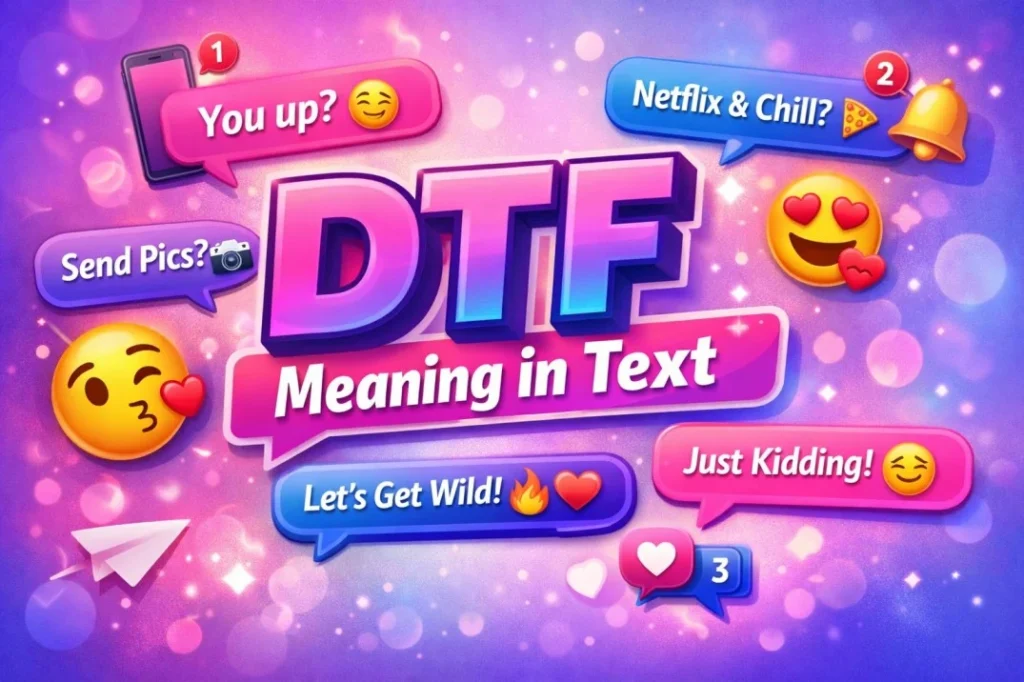

DTF means “Down To F*” and is used in texting or online chat to ask if someone is interested in a casual romantic or sexual encounter.**
If you’ve ever come across the term “DTF” in a message, meme, or social media comment and paused for a second wondering what it really means, you’re definitely not alone.
Some slang terms are playful and harmless, while others carry a bit more edge. DTF is one of those expressions that can shift tone dramatically depending on context, audience, and intent.
It’s a bold, informal phrase, often used in flirtatious, humorous, or sometimes direct conversations. While widely recognized, it’s important to understand its tone before using it.
What Does DTF Really Mean in Chat?
At its core, DTF is shorthand for “Down To F*,”** where the last word is typically implied rather than written out fully in polite settings.
It’s used to:
- Ask if someone is open to a casual hookup
- Express romantic or physical interest
- Joke in a playful or exaggerated way
However, tone matters a lot here. DTF can feel:
- Funny and lighthearted among close friends
- Flirty between romantic interests
- Offensive or inappropriate in formal or unfamiliar settings
Understanding that difference is key.
Origin of DTF
The phrase “Down To F*”** existed in spoken slang long before texting culture took over. However, its abbreviation DTF became popular with the rise of internet communication and pop culture references.
Timeline of Popularity
- Early 2000s: Slang existed verbally but not widely abbreviated
- Late 2000s: DTF gained traction in online chats and forums
- 2010s: Became mainstream through reality TV, memes, and social media
- 2020s–2026: Still widely used, often humorously or ironically
One major reason for its popularity is how short, direct, and attention-grabbing it is.
Why People Use DTF in Texting
Despite being bold, DTF continues to appear frequently in chats and comments. Here’s why:
- Directness: It clearly communicates intent without ambiguity
- Humor: Often used jokingly among friends
- Shock value: Its bluntness can grab attention
- Cultural familiarity: Many people recognize it instantly
However, it’s not always used seriously. In many cases, people use DTF sarcastically or playfully rather than literally.
Usage of DTF in Chat
DTF is highly context-dependent. Let’s break down how it’s used across different tones:
1. Flirty or Romantic Tone
This is the most literal use of DTF. It suggests interest in a casual relationship or encounter.
Example:
“Hey… are you DTF tonight?”
This usage is direct and intimate, and should only be used where mutual interest is clear.
2. Playful or Joking Tone
Among friends, DTF can be used humorously without serious intent.
Example:
“DTF for pizza and movies tonight? 😂”
Here, the meaning shifts completely. It becomes funny and harmless.
3. Sarcastic or Meme Tone
DTF is often exaggerated in memes or online humor.
Example:
“DTF… down to fail this exam together XD”
This usage removes any romantic meaning and turns it into a joke.
4. Risky or Inappropriate Tone
Used incorrectly, DTF can come across as too forward or disrespectful, especially with strangers.
Example:
Sending “DTF?” to someone you don’t know well
This may feel uncomfortable or intrusive.
Table: Tone and Meaning of DTF in Different Contexts
| Tone | Example Text | Interpretation |
|---|---|---|
| Flirty | “Are you DTF tonight?” | Direct romantic or physical interest |
| Playful | “DTF for ice cream?” | Joke, not serious |
| Sarcastic | “DTF… down to cry over deadlines” | Humor or exaggeration |
| Inappropriate | “DTF?” (to stranger) | Too forward or uncomfortable |
| Friendly Joke | “DTF for Netflix marathon?” | Casual and harmless |
Comparison with Similar Slang Terms
DTF is not the only slang used in texting to express interest or humor. Here’s how it compares:
| Term | Meaning | Tone Difference |
|---|---|---|
| DTF | Down To F*** | Bold, direct, edgy |
| Netflix and Chill | Suggestive hangout | Indirect, softer |
| Hook up | Casual romantic/physical meeting | Neutral slang |
| Smash | Informal for intimacy | More explicit, slang-heavy |
| Hang out | Spend time together | Completely neutral |
Key Insight
- DTF is more direct than most alternatives
- It can feel too strong if the relationship isn’t already comfortable
Modern Usage in Social Media and Memes
DTF has evolved beyond its original meaning. Today, it’s widely used in humorous and creative ways:
- “DTF = Down To Food 🍕”
- “DTF = Down To Finish this series”
- “DTF = Down To Fail together 😂”
This shift shows how language adapts. What was once purely suggestive can now be funny and flexible.
Table: Alternate Funny Meanings of DTF
| Phrase Expansion | Context | Tone |
|---|---|---|
| Down To Food | Food plans | Playful |
| Down To Focus | Study/work | Motivational |
| Down To Fail | Exams or struggles | Self-humor |
| Down To Frolic | Light joking | Silly |
| Down To Finish | Tasks or shows | Casual |
Alternate Meanings of DTF
While the primary meaning is widely known, DTF can also have different interpretations depending on context:
- Humorous reinterpretations
Often used creatively in memes - Non-romantic shorthand
Used jokingly in friend groups - Rare technical usage
In very niche cases, abbreviations may overlap but are uncommon
When NOT to Use DTF
There are situations where using DTF can backfire:
- In professional conversations
- With people you don’t know well
- In formal or serious discussions
- When tone may be misunderstood
Using DTF in the wrong setting can make you appear rude, immature, or overly aggressive.
Polite and Safer Alternatives
If you want to express interest without being too bold, try these:
- “Do you want to hang out?”
- “Are you free tonight?”
- “Want to grab dinner?”
- “I’d love to spend time with you”
These options are:
- More respectful
- Easier to interpret
- Suitable for wider audiences
Table: DTF vs Polite Alternatives
| Direct (DTF Style) | Polite Alternative |
|---|---|
| “DTF tonight?” | “Want to hang out tonight?” |
| “Are you DTF?” | “Would you like to meet up?” |
| “DTF?” | “Are you free?” |
| “DTF later?” | “Want to spend time together?” |
Real-Life Examples of DTF in Conversations
1: Flirty Chat
“Hey… I’ve been thinking about you. Are you DTF tonight?”
2: Friendly Joke
“DTF for burgers and Netflix? 😂”
3: Meme Style
“DTF = Down To Forget my responsibilities”
4: Group Chat Humor
“Everyone DTF for a late-night gaming session?”
Cultural Impact of DTF
DTF has become part of modern internet slang culture, especially among:
- Young adults
- Social media users
- Meme communities
Its popularity shows how language becomes:
- Shorter
- More expressive
- More context-driven
At the same time, it highlights the importance of understanding tone and boundaries in digital communication.
How Tone Changes Meaning
Tone is everything with DTF. The same phrase can feel completely different depending on context:
- Friendly: harmless and funny
- Flirty: intimate and suggestive
- Random: awkward or inappropriate
That’s why reading the situation is crucial before using it.
FAQs
1. What does DTF mean in texting?
DTF means “Down To F***” and is used to ask if someone is interested in a casual romantic or physical encounter.
2. Is DTF always sexual?
Not always. It can be used jokingly or creatively, especially in memes or among friends.
3. Is it rude to say DTF?
It depends on context. It can be seen as rude or too direct if used with someone you don’t know well.
4. Can DTF be used in a funny way?
Yes, many people use it humorously, like “DTF for pizza?”
5. Is DTF appropriate in professional chats?
No, it is too informal and potentially inappropriate for professional settings.
6. What are safer alternatives to DTF?
Phrases like “Want to hang out?” or “Are you free tonight?” are better options.
7. Is DTF still popular in 2026?
Yes, but it’s often used more humorously than seriously.
8. Why do people use DTF instead of full phrases?
Because it’s short, direct, and widely understood in online culture.
Practical Tips for Using DTF
- Always consider your relationship with the person
- Use it only in casual settings
- Avoid using it with strangers
- When unsure, choose a safer alternative
- Use humor carefully to avoid misunderstandings
Conclusion
DTF is one of the most recognizable slang terms in modern texting, known for its bold, direct meaning and flexible usage. While it originally referred to a casual romantic interest, its meaning has expanded to include humor, sarcasm, and playful reinterpretations.
Understanding how and when to use DTF is essential. In the right context, it can be funny and engaging. In the wrong one, it can feel inappropriate or uncomfortable.
The key takeaway is simple:
Know your audience, read the tone, and when in doubt, keep it respectful.
That balance helps you communicate clearly while avoiding awkward situations.
Read More Related Articles:
- Romeo Miller Net Worth: Career Timeline & Income Rise In 2025-26
- Stray Kids Net Worth: How the K-Pop Superstars Built Their Fortune In 2025-26
- Michelle Moyer Net Worth: Wealth and Lifestyle Insights In 2025-26